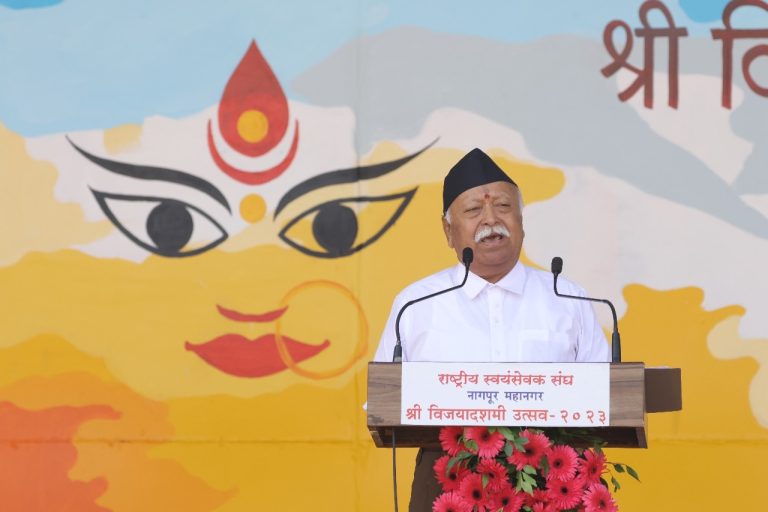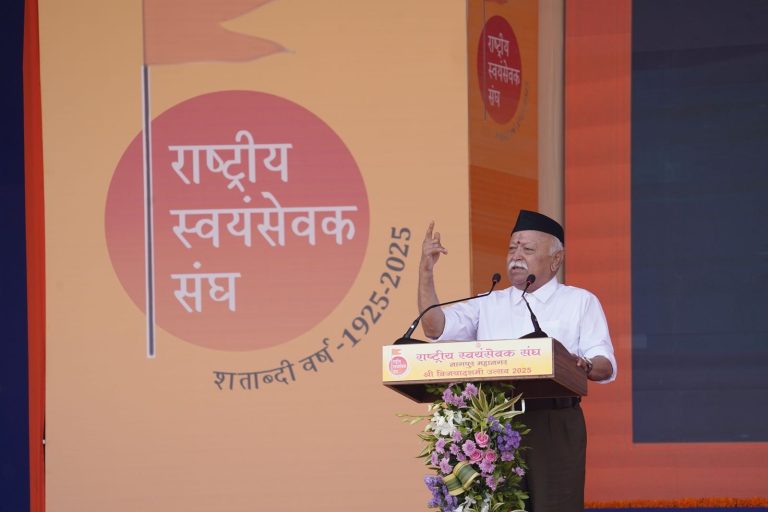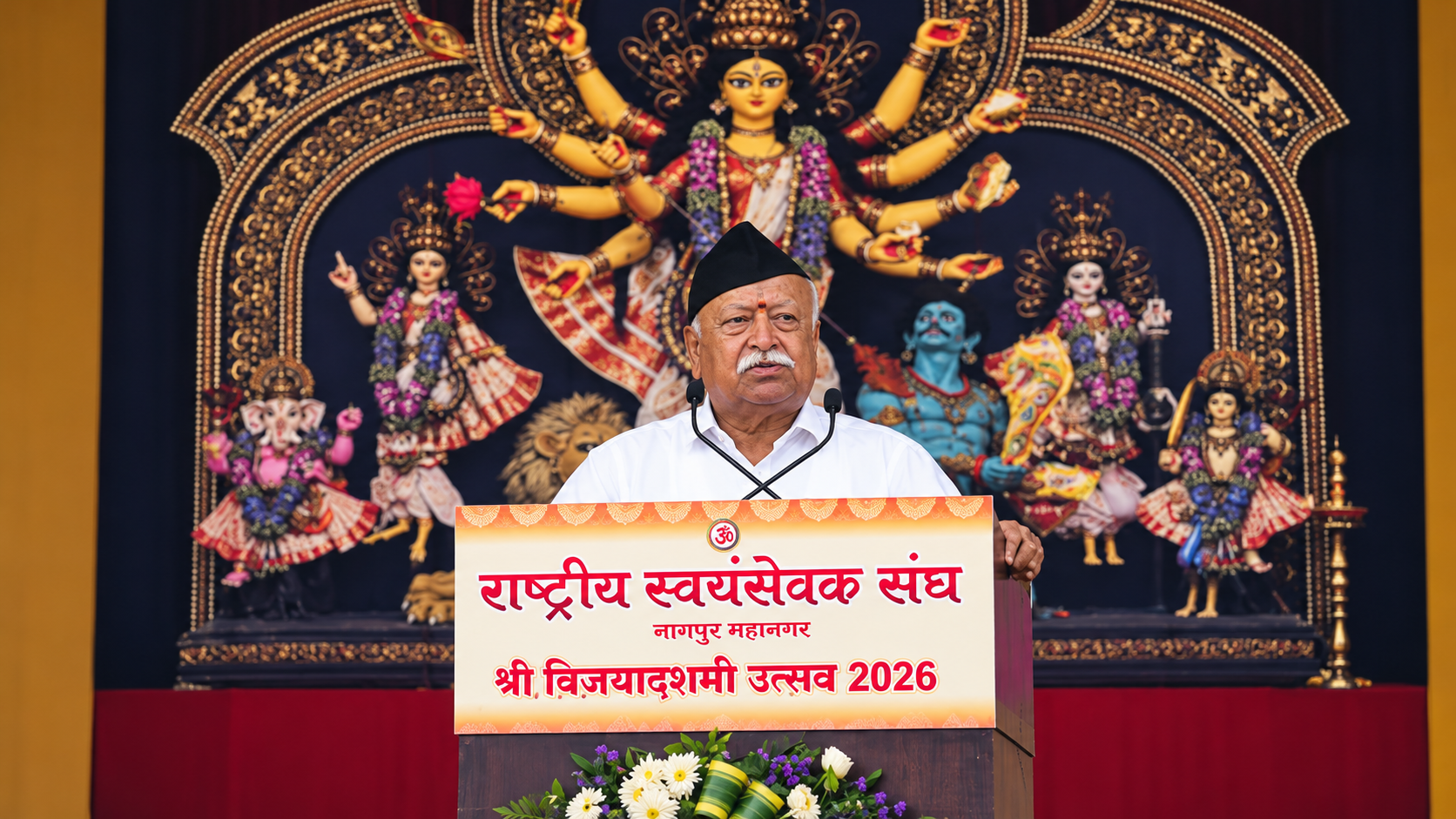
Every Vijayadashami address by the RSS Sarsanghchalak (chief Mentor) from Nagpur is closely read by RSS swayamsevaks(volunteers) and critics alike, because it indicates the broad direction of the world’s largest voluntary organisation, which holds considerable influence in Indian society through 32 inspired organisations and millions of volunteers.
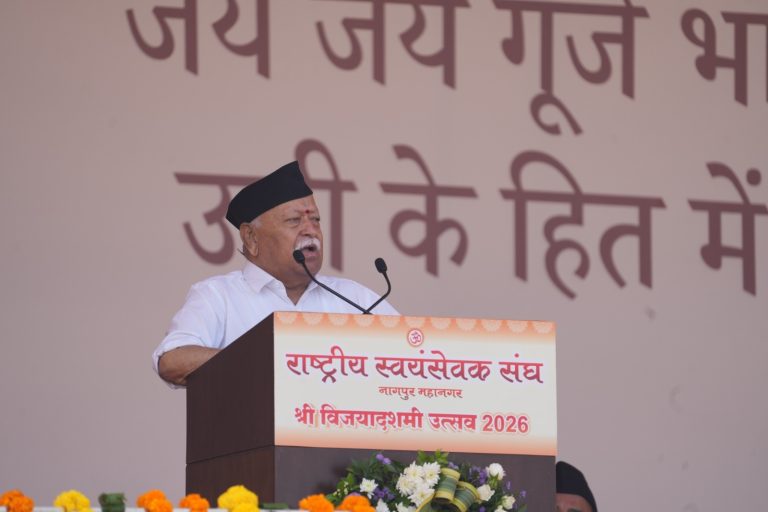
This year’s Vijayadashami address on October 20 carried extra weight, as it marked the conclusion of the centenary celebrations of the Rashtriya Swayamsevak Sangh (RSS). The RSS was founded in 1925 by Dr Keshav Baliram Hedgewar on the occasion of Vijayadashami at Nagpur in Maharashtra. The speech then gave an account of what the centenary year achieved.
The scale of the outreach
Unlike other organisations that celebrate milestones with glitz and glamour, the RSS uses the occasion to expand its reach and strengthen its organisational structure. As the Sarsanghchalak explained, during the centenary year the RSS conducted the Sampark Abhiyan (door-to-door campaign), under which 10,19,88,511 houses were contacted in 4,61,527 villages and 41,076 bastis (urban areas).
The other numbers follow the same pattern. Sadbhavana Baithaks (goodwill meetings) were held in 5,036 khands (taluks), Hindu Sammelans (conferences) in 34,187 mandals, and Yuva Sammelans (youth conferences) drew 39,25,225 young participants.
The outreach went abroad as well. Senior RSS functionaries, including Bhagwat, visited Western countries and found a growing curiosity about Bharat. In his assessment, shared in this year’s Vijayadashami address, those societies are prosperous but troubled by a worldview built on materialism, individualism and unchecked consumption. They lack answers on handling diversity, reconciling development with the environment, treating outsiders with a sense of belonging, and keeping family life and values intact for the next generation.
What the speech says to Gen Z
The Sarsanghchalak began with the weakening of the old channels of value transmission. Sanskars once passed on through family elders, school curricula and the social environment are fading, while social media delivers every kind of information to everyone. In many countries, he said, young people take in that content without separating the appropriate from the inappropriate, and those countries have since put regulations on such platforms. He said Indian society increasingly feels the same need, particularly for OTT platforms, and asked the government to consider it. He added that, even with information freely available, the young must be taught to choose well.
On drugs, he said:
“It is this same lack of discernment that is causing the younger generation across the world to fall prey to addiction to intoxicating drugs. Drug addiction is a serious national problem, and the government, administration, and the society must timely address it and start taking measures to overcome it.”
He announced a response. RSS swayamsevaks (volunteers) will bring together everyone working on the problem and build a nationwide movement against it. He tied this to the larger goal: the responsibility for a Bharat of supreme prosperity and a Vishwaguru role will fall on the coming generation, and the youth must be fully equipped for it.
Development with discipline
He welcomed technology but set a condition:
“Advances in science and technology help human beings lead a materially comfortable life and refine their conduct based on knowledge and reason. Therefore, new knowledge, scientific developments, and technology should be welcomed and embraced. However, it must also be remembered that technology is merely a means.”
He then warned about artificial intelligence:
“Otherwise, the knowledge of atomic science will produce more life-destroying weapons than clean energy, and even highly useful technologies such as artificial intelligence will continue to be used to create means of misleading, deceiving, and spreading falsehood among people.”
The objective, in his words
Anyone who wants to critique the Sangh should begin with this passage:
“The Rashtriya Swayamsevak Sangh (RSS) is working to awaken this very Hindu spirit and build the entire society into a well-organized and strong society. Without strength even the sustenance, prestige, and protection of individual life to global life is not possible. Therefore, advocating or working towards building an organized and strong Hindu society is not contrary to the spirit of respecting all faiths or to the emotional unity of the nation. Since the Hindu society’s worldview and nature are inclusive, we must understand that such efforts will only strengthen the emotional unity, goodwill, and good conduct among all of us.”
The campaign against the Sangh
He addressed the targeting of the Sangh directly:
“There are also ongoing attempts to cast doubt on the goodwill of Sangh and the sincerity of its intentions by citing certain undesirable and/or unexpected incidents occurring here and there, with which the Sangh has neither any connection nor any association or support. The work of the Sangh is founded on pure, selfless, and virtuous love. It is carried forward through the dedication, service, and hard work of its Swayamsevaks. The Sangh seeks nothing for itself.”
He explained why the pressure exists. In his account, Bharat’s steady rise threatens forces that want instability among nations and want to place their own proxies in positions of influence. He said those forces know this, which makes Bharat their biggest competitor and their ultimate target, and they therefore plan to dismantle Bharat, Hindu society and the Sangh.
Agitations: the test he set
Bhagwat also addressed protests, and his position is balanced. In his words:
“In our vast society, problems do exist. There are likely to be numerous shortcomings in the system as well. It is only natural that these may lead to agitations. However, such agitations should aim to provide solutions.”
He added a note of caution on how movements can be turned. When a movement becomes a political tool driven by hostility towards a person, group or ideology, he said, forces hostile to Bharat exploit it. Their method is to deepen differences into hostility, stir up a sense of victimhood, erode faith in the country’s systems, and create discord, separatism and disorder.
The standard applies to everyone. Whether it is the agitating group, the government and administration keeping order, or political leaders, all must avoid creating discord and division in one undivided society, even when emotions run high. Actions must stay within the Constitution and the law, and speech and conduct must keep the dignity of civilised discourse.
What comes next
The address closed with a direction rather than a celebration:
“After completing the programmes and achieving the objectives of the centenary of its work, Sangh will move forward towards building an organized, hard working, victorious force of the society.”
Bhagwat’s Vijayadashami address sets out the RSS’s stand on several issues. The RSS wants society to seek solutions rather than merely highlight problems, and it is leading by working on the ground to find those solutions and set an example that others can follow.