The Rashtriya Swayamsevak Sangh (RSS), world’s largest voluntary organisation, has a defining presence in India. At the heart of its functioning lies a robust system of cadre training, focused on disciplineand selfless service. This training is imparted through a well-structured network of residential training programmes held regularly across the country.
Every year, there is a steady increase in the number of people joining the RSS. With changing times and evolving national priorities, the organisation has continually revised its training methodology to remain effective in shaping committed Swayamsevaks (volunteers). These training programmes have witnessed rapid expansion.
2025 Training Camps and Their Social Impact
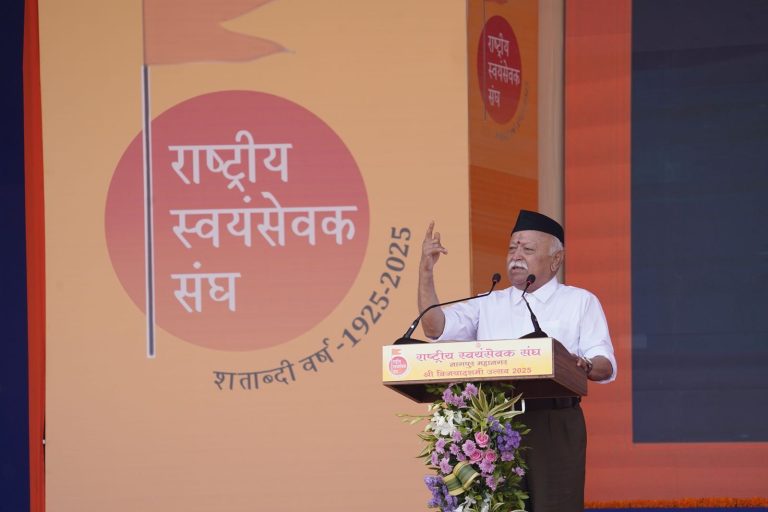
At the Akhil BharatiyaPrantPracharak Baithak (All-India meet of RSS full-time workers), held from July 4 to 6, 2025, at New Delhi, Sunil Ambekar, Akhil Bharatiya Prachar Pramukh (All-India Head of Media), reviewed the recent training activities. He stated:
“This year, the Sangh successfully conducted 100 ShikshanVargs (training camps), with 75 of them catering to youth below the age of 40. The remaining 25 were attended by swayamsevaks in the 40–60 age group. These vargs, attended once in a lifetime, play a pivotal role in preparing dedicated karyakartas (volunteers) for the Sangh’s work.”
Ambekar noted that each of these camps would be evaluated during the Baithak, with comprehensive feedback collected from all Vibhags(departments) to assess both the quality of training and its real-world social impact.
To illustrate this, he referred to a recent airplane crash in Ahmedabad, where swayamsevaks from the Sewa Vibhag (Service Department) promptly mobilised to provide on-ground assistance:
“A reflection of such trainings is received during such vargs. Detailed statistics and impact reports from these camps will be presented.”
2024 Training Camps
In 2024, the RSS undertook some revisions in its training programs. These changes were introduced at the Akhil BharatiyaPratinidhi Sabha(All-India Representative Council)meeting at Nagpurin Maharashtra.
A total of 72 camps were held for those under 40, including:
- 60 Sangh Shiksha Varg (Training Camps – First Year),
- 11 Karyakarta Vikas Varg-I (Worker Development Camp – Level 1), and
- 1 Karyakarta Vikas Varg-II (Worker Development Camp – Level 2).
These camps trained 20,615 volunteers.
For the 40–65 age group, 18 special camps were organised, training an additional 3,335 swayamsevaks.
A major addition was the 3-day Prarambhik Varg (Introductory Camp) for newcomers, which saw twice the participation compared to the Prathamik Shiksha Varg (Primary Training Camp). Nearly one lakh new volunteers attended the latter.
Changes also included:
- Reducing the First-Year Camp from 20 to 15 days,
- Renaming Second-Year and Third-Year as Karyakarta Vikas Varg-I and Karyakarta Vikas Varg-II, and
- Adding a five-day behavioural training segment in the third-year camp.
Participants typically range from 16 to 65 years, with camps tailored to different age groups and roles.
To fully appreciate the significance of these structural changes, it is important to understand how the organisation’s training framework has evolved over the decades.
Historical Evolution of RSS Training Camps
The first RSS training camp was held in Nagpur in 1929, originally called a “Summer Camp.” It ran for 40 days during school vacations. These were later renamed Officers’ Training Camps (OTC) and then, under the guidance of M.S. Golwalkar (second Sarsanghchalak), formally termed Sangh Shiksha Varg (SSV) post-1950.
By the mid-1930s, training expanded to cities like Pune (1935) and Lahore (1938). The focus, initially on physical drills and unity, gradually broadened to include intellectual training, moral development, and community leadership.
While the structure and nomenclature have changed, the spirit of the camps rooted in simplicity, discipline, and self-service remains consistent.
Life in RSS Camp
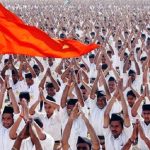
Life in an RSS camp is marked by discipline, equality, and self-reliance. The day begins at 5:30 AM with physical training, followed by intellectual sessions, meals, cultural programs, and ends with lights out at 10 PM. Vegetarian meals are self-cooked and served in turns. . All expenses are borne by the participants themselves.
Entry to RSS camps is by invitation only, given to swayamsevaks with consistent shakha participation and discipline. Each camp is led by a Sarvadhikari(chief in-charge of a particular camp)and one senior RSS functionary Palak Adhikari(Guardian) overseeing overall well-being and guidance. Camps are visited by senior functionaries of the RSS and prominent personalities who offer guidance and inspiration.
Among all the levels of training, one that holds particular distinction is the Third-Year Camp, designed for Swayamsevaks who have completed the foundational stages.
The Role of the Third-Year Camp and Pracharaks
The Karyakarta Vikas Varg-II (Third-Year Camp) is conducted every year in Nagpur, lasting 25 days. In 2024, 735 swayamsevaks from across the country participated. Only those who’ve completed the earlier two stages can attend.
A large number of these third-year trainees go on to become Pracharaks(full-time volunteers) dedicated to grassroots work. However, it is not mandatory, and many continue contributing through shakhas and social outreach.
Beyond their internal organizational role, these camps play a broader function in shaping socially responsible citizens.
The goal of RSS training camps is to prepare grassroots leaders for real-world challenges.
(The writer is an author and columnist)