About the Series
This article is Part 2 of a three-part series providing a curated translation and analysis of the handbook Vishay-Bindu (Fifth Edition, 2012). While Part 1 focused on the civilisational definition of the nation, this segment explores the practical application of these ideals through patriotism, national character, and the relationship between society
Building upon the cultural and civilisational understanding of the nation outlined earlier, the following sections explore how these ideas translate into individual conduct, social responsibility, and public life. The focus now shifts from defining the nation to living the nation, through patriotism, character, political engagement, and the balance between society and the state. A central pillar of this lived national consciousness is the idea of patriotism.
Patriotism: Meaning and Practice
During the British era, negative resistance like derailing trains or damaging government property was considered patriotism. This reflects a distinction between reactive resistance during colonial rule and a broader, constructive understanding of national duty.
Our concept of patriotism is “Positive,” not “Reactive.” Patriotism does not mean only love for the land, but a sense of belonging toward the aquatic, terrestrial, and aerial life, nature, culture, history, great men, arts, and sciences of this place. It is the intense desire to protect them and a readiness to sacrifice everything for their advancement. In this view, patriotism expands beyond territorial loyalty to encompass a deep civilisational and ecological connectedness.
Manifestation/Expression of Patriotism:
This patriotism is expected to manifest across three dimensions: The sentiment of patriotism must be expressed through Mansa (Thought), Vacha (Speech), and Karmana (Action).
- Mansa (Thought): Innate patriotism; a natural process, not an accident. Examples: Various incidents from the lives of Subhas Chandra Bose, Mahatma Gandhi, etc., and Rabindranath Tagore renouncing his “Sir” (Knighthood) in protest against Jallianwala Bagh. Param Pujaniya Doctor Hedgewar was the living embodiment of innate patriotism. These examples are intended to illustrate how inner conviction translates into public action.
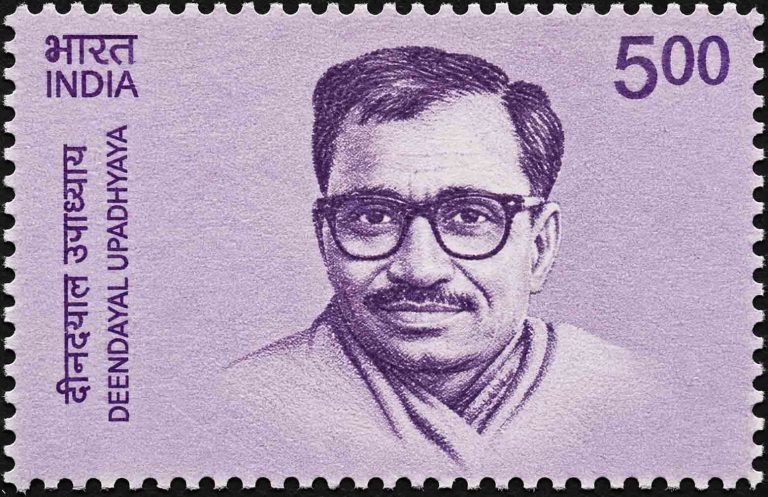
- Vacha (Speech): Language that unites, not divides. No opposition to any class or community. Examples of Vivekananda Ji, Guruji [Golwalkar], and Deendayal Ji.
- Karmana (Action): Examples of Khando Ballal, Durgadas, Banda Bairagi, Guru Tegh Bahadur, etc.
Lust, anger, greed, attachment, fear, jealousy, malice, and selfishness have caused great harm and the downfall of the country and society. Therefore, our society and country should not suffer damage due to these vices in thought, word, or deed. One must remain ready day and night for this and prepare society for the same.
The emphasis here is on internal discipline as a prerequisite for national strength. Thus, self-respect becomes a key emotional expression of patriotism.
“A sense of Self-Respect (Swabhiman) regarding one’s country, Dharma, and culture is Patriotism. (To be proud of Dharma, Sanskriti is to be Proud of being a Hindu)” — Swami Vivekanand
The transition from individual sentiment to collective strength is a recurring theme in this framework. Having defined patriotism as a positive, multi-dimensional commitment, the manual moves from the ‘intent’ of the citizen to the ‘character’ of the collective. It posits that a nation’s survival depends not on political manoeuvres, but on the moral integrity and disciplined conduct of its people. A concept explored in the following section on National Character.
Individual Character – National Character
- Two Sides of a Coin: Individual character and national character are two sides of the same coin; therefore, both are essential.
- Sacrifice of Self-Interest: The sacrifice of individual interests for national necessity. (The guiding principle being: “Keep performing those works in which the welfare of the country lies”).
- Holistic Service: Working in the national interest through Man, Vachan, Karm (mind, word, and deed) protecting national self-respect.
Historical and Cultural Examples:
- Ancient Example: The Pandavas setting aside personal vows and prestige in the interest of the nation to engage in war.
- Historical Figures: The examples of Chhatrapati Shivaji Maharaj, Khando Ballal, King Surajmal of Bharatpur, and Bajirao Peshwa.
- Unity in the Post-Independence Era: After the ban on the Sangh was lifted in 1949, Shri Guruji (Golwalkar) cited the example of the Pandavas, ‘Vayam Panchadhikam Shatam’ (We are one hundred and five), implying that against a common adversary, internal differences vanish. He used the analogy: “If the tongue is accidentally bitten by one’s own teeth, the teeth are not broken.” He emphasised that all languages are Rashtriya (national), and whether Mumbai remains in Gujarat or Maharashtra, it remains “Bharat mein hi” (within Bharat alone). He also issued a call for unity during the 1971 war.
- The Integration of Bharat: The voluntary merger of their respective princely states by the Kings in 1947 is a supreme example of Rashtriya Charitra.
- Dr. Ambedkar’s Choice: Dr. Ambedkar rejected Lobh (allurements/greed); he did not convert to Christianity or Islam but remained within the Hindu fold by becoming a Buddhist.
- Global Examples: Examples of national character from other countries: Churchill (England), Israel, Japan, Germany, Lord Clive, Dr. Watson, etc.
The Consequences of the Absence of National Character:
- Lack of National Character: Instances like espionage by the Larkins brothers in the Samba scandal, Shadilal Kapoor selling secret files, diplomat Madhuri Gupta spying for Pakistan, and the rise of separatism.
Manifestation in a Sovereign Nation:
How should National Character manifest in a free nation? Through pride in Swadeshi (indigenous products), Swabhasha (native language), traditional attire, and Swadharma (one’s own Dharma). It is further manifested by stopping Pratibha Palayan (brain drain), achieving a high standing for Bharat in the international sports arena, and the development of indigenous technology.
- National Aspirations: It is national aspirations that manifest national character. Therefore, the cultivation of national aspirations is essential. One must prepare the mind so that Bharat attains the highest position in the world, and behave in accordance with that goal.
In this framework, character is not merely a private virtue but a public necessity. The manual suggests that while individual morality is the building block, it must be directed toward a collective aspiration, the restoration of Bharat’s global standing. By citing both the ancient wisdom of the Mahabharata and the modern choices of Dr. Ambedkar, the text seeks to bridge historical continuity with contemporary civic duty. This leads directly to the question of how this character influences the structures of governance and the role of the state.
Perspective Toward Politics and Society
- Politics or the State institution is just one among the various organs of society.
- The country has accepted the Democratic Governance System, which is superior to all other systems prevalent in the world. Dynastic systems and Monarchies are gradually becoming obsolete.
- Democracy is also popular in other sectors such as reading rooms, trade unions, and cooperative banks.
- There should also be vocational representation in democracy, and it should be structured according to Indian conditions. This is our social responsibility.
- Viewpoint: Organisation of the entire society, not of any specific faction or sect. The Hindu society is being divided by caste-kinship, high-low, and regionalism. Differences of forward-backward are being created. To end these differences, social harmony is essential.
- National Unity: Society must remain healthy and organised. (Body Example: The body stays healthy only when there is coordination and harmony among all organs).
- Example of Harmony: The mixing of sugar and milk. The sentiment of untouchability must be destroyed at the roots.
A Comparative Analysis of People’s Power and State Power
Common Thinking: All works will be done by the government only.
- The more possessed of rights/authority the State Power is, the more autocratic and corrupt it is. “Power corrupts, absolute power corrupts absolutely.”
- In the absence of an Awakened People’s Power or Society’s Power, society becomes completely dependent on the State. The structure of Greece, Egypt, Rome, etc., was dependent on the State, therefore as soon as others captured the State, they were wiped out. Men can come and men can go but I go on for ever, Government can come and Government can go but Hindu nation will go on for ever.” (Reference Lord Brookes). Prahlad-Hiranyakashyap, Ram-Ravana, Krishna-Kansa, Shivaji-Aurangzeb, etc., are symbols of People’s Power and State Power.
- Examples of autocratic power and a powerful society exist during the Emergency period.
- If People’s Power is awakened, then State Power is a helper for society, otherwise, it is a destroyer. Bhishma Pitamah said— “Na Rajyam Na Cha Rajasit” [Neither State nor King existed] then the Moral Power of society alone was the regulator.
- The organisation (RSS) is active in the creation of an awakened People’s Power. Control of State Power is achieved by People’s Power alone.
(The writer is an author and columnist)