RSS Centenary Outreach: The Grassroots Expansion Through Hindu Conferences
Updated: March 19, 2026 1:48
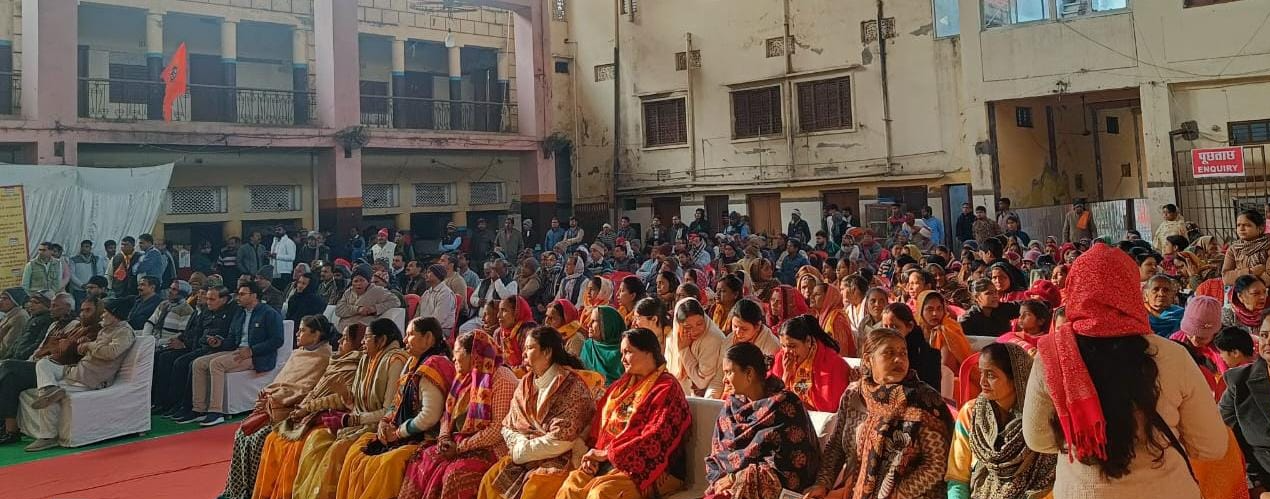
Away from the headlines, the Rashtriya Swayamsevak Sangh (RSS) has been quietly organising thousands of Hindu Sammelans (Hindu Conferences) across India. These conferences form an important part of the organisation’s centenary programmes.
The RSS completed 100 years of its existence on the occasion of Vijayadashami in 2025. Marking this milestone, the organisation has rolled out a wide range of activities aimed at significantly expanding its social outreach and organisational presence.
This approach reflects a long-standing pattern in the RSS. Throughout its century-long history, the organisation has used major milestones not merely as occasions for celebration but as opportunities to strengthen its grassroots network and expand its societal engagement. In that sense, launching a major outreach initiative after completing 100 years is a natural extension of its organisational philosophy.
One of the key strategic pillars of this centenary expansion plan is the organisation of Hindu Sammelans at the local level.
Origin of the ‘Hindu Sammelan’
RSS volunteers have been formally organising Hindu conferences since the 1960s.
In 1966, the first World Hindu Conference was held in Prayagraj, Uttar Pradesh, during the Kumbh Mela. On that occasion, the Vishwa Hindu Parishad (VHP) was formally launched. This event was followed by a series of similar conferences at regional and state levels. The second World Hindu Conference was organised by the VHP in 1979, again at Prayagraj during the Kumbh.
Another significant Hindu Conference was organised in the backdrop of the mass conversion of more than 800 members of the Scheduled Caste community to Islam in Meenakshipuram, Tamil Nadu. In response, the VHP took the initiative to establish an organisation called Virat Hindu Samaj.
Under its banner, a massive Virat Hindu Sammelan was organised in Delhi, which reportedly drew a gathering of around half a million people.
Interestingly, Virat Hindu Samaj was headed by senior Congress leader Dr Karan Singh, while its general secretary was Ashok Singhal, an RSS pracharak (full-time worker) who later played a key role in the Ram Janmabhoomi movement.
Why the Current Hindu Sammelan Initiative Is Different
At first glance, organising Hindu conferences may appear to be a routine organisational exercise. However, the current initiative differs from earlier efforts in several important ways.
First, instead of focusing on a few large conferences, the emphasis now is on organising smaller gatherings at the grassroots level.
Second, the scale of the programme is unprecedented. The number of such conferences is expected to reach one lakh (100,000).
Third—and perhaps most significant—is the participation of individuals who have not previously been associated with the RSS or any of its affiliated organisations. Many of them are ordinary citizens with largely apolitical backgrounds.
In almost all the places, the RSS volunteers are not directly organising these conferences. Instead, they identify respected local personalities and encourage them to form an organising committee. This committee is usually headed by a widely respected individual from the area who has no direct organisational link with the RSS. Most committee members have a similar profile.
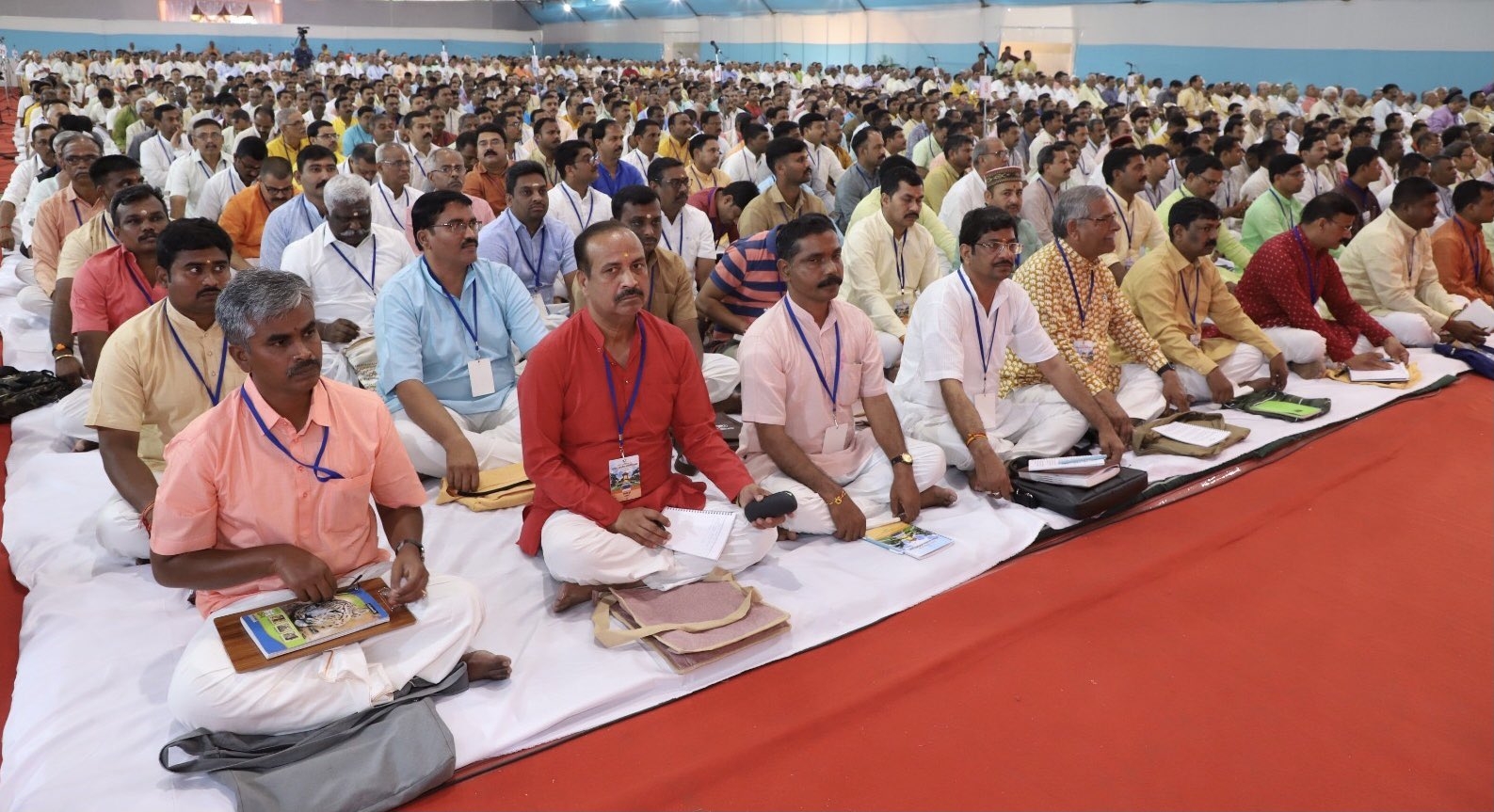
The committee typically arranges the venue, invites keynote speakers who are mostly not associated with the RSS and mobilises local participation. With the support of RSS volunteers, the committee reaches out to people in the surrounding neighbourhoods to invite them for the conference. Social media and local communication networks are also used to spread the word.
Attendance at these conferences usually ranges from 50 to 500 participants. And all the participants are generally also given a set of books or literature on various aspects of Hindu civilisation.
Themes and Structure of the Conferences
The themes discussed in these gatherings are largely civilisational and cultural rather than political. The focus is on the ideas, traditions, and heritage of Hindu civilization.
People from all religions are welcome to attend and participate. In several places, a senior RSS functionary is present to conduct a question-and-answer session with the audience if they want to know anything about the RSS and its activities.
However, the final decisions regarding the programme structure and execution are taken by the local organising committee, most of whose members are not associated with the RSS. Funding for these conferences is also generally raised locally through contributions from community members.
Expanding Organisational Reach
When viewed in its entirety, this initiative reveals a broader organisational outreach at a massive scale.
With nearly one lakh such conferences being held, the RSS is potentially establishing direct contact with seven to eight million people who were previously outside its organisational network. For an organisation that already runs more than 80,000 shakhas—daily gatherings where volunteers conduct physical, intellectual, and community activities—this represents a significant expansion of social engagement.
The model used to organise these Hindu Sammelans reflects a core organisational principle of the RSS as espoused by many of its stalwarts: “We(RSS) are not an organisation within the society; we are organising the society.”