RSS @100: Dharma, Not Dogma – A Civilisational Roadmap for Balance in Society
Updated: September 2, 2025 2:36

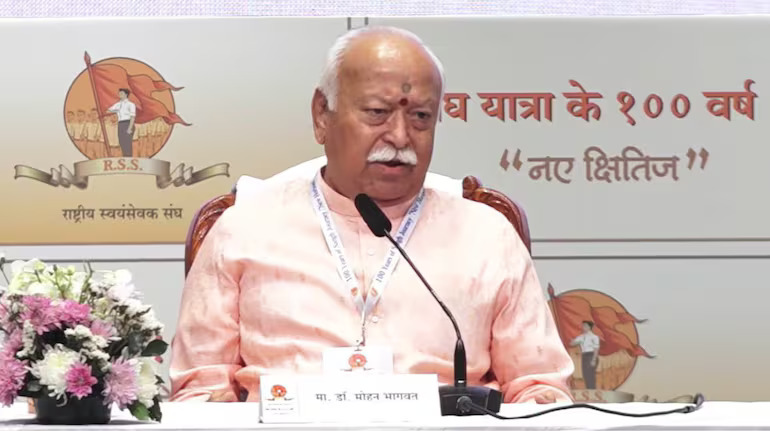
The three-day lecture series organised by the Rashtriya Swayamsevak Sangh (RSS) from 26-28 August in Delhi has set up a perfect ground for a larger debate on the role of ‘Dharma’ and ‘Religion’ in Indian society.
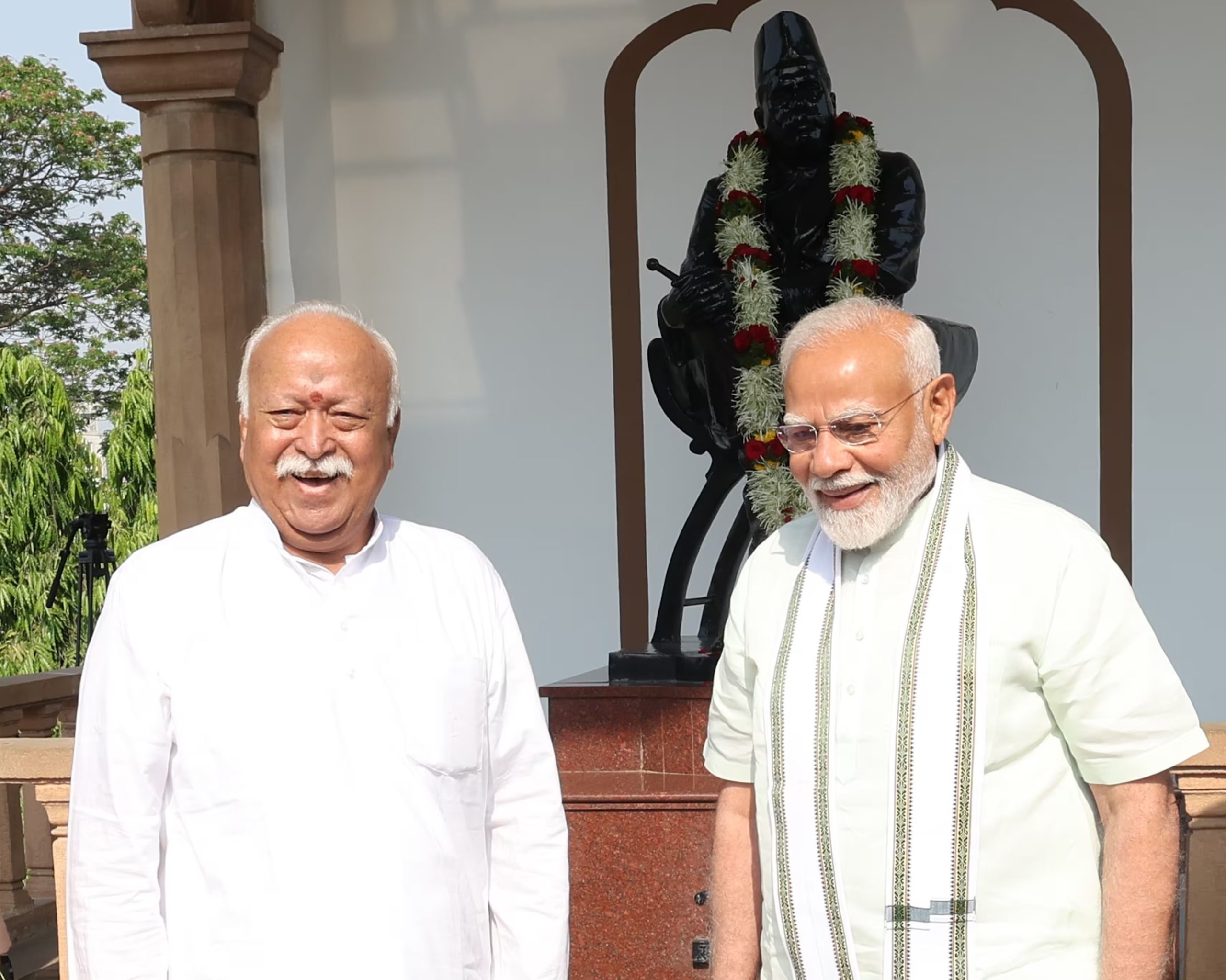
The lecture series was organised in the backdrop of the RSS completing 100 years on October 2 this year on the occasion of Vijaydashami. It was addressed by the RSS Sarsanghchalak Mohan Bhagwat.
It may be recalled that Prime Minister Narendra Modi had also recognised the contribution of the RSS in his Independence Day speech this year.
Middle Path not Extremism
The RSS Sarsanghchalak while addressing around 1200 prominent members of society, including diplomats from several countries, set the record straight about RSS’ worldview.
He made it clear that the RSS wants to restore balance in society and avoid all forms of extremisms. Bhagwat emphasised that RSS is a votary of middle path according to the Bharatiya tradition. This middle path is rooted in the concept of Dharma’(righteousness) which shouldn’t be confused with religion. In the contemporary world, the RSS sees manifestation of this ‘Dharma’ in every-day life through initiative of Panch Parivartan (Five-fold Transformations), which are social harmony, family awakening, environmental awareness, selfhood. and civic duties.It is clear that this is going to be core philosophical framework for the future roadmap. The fundamental building block of this philosophy is ‘Dharma’
Dharma vs Religion
Bhagwat made it clear in his speech that ‘Hindutva’ (Hinduness), a term often misinterpreted as reflection of an extreme Hindu majoritarian view, is rooted in the eternal values of India’s uninterrupted civilisational journey. To comprehend this argument by Sarsanghchalak, one has to understand the difference between ‘Dharma’ and ‘Religion’.
By treating both of them as synonyms, the Western and Marxist historians and political scientists have tried to consistently run down upon ‘Hinduness’ as a parochial militant philosophy that is against Muslims and Christians. Nothing can be farther from truth. To understand the reasons behind this misinterpretation and get a rational and original conceptual framework we need to dig deeper by addressing some basic questions.
Hindutva and Hinduness
‘Hindutva’ is the manifestation of Hindu Dharma and Hinduness is the closest English translation of Hindutva. The concept Hindutva or Hinduness is deeply rooted in Hindu thought that has evolved over several millennia starting from Rig Veda, the oldest book on this planet. There are some core values of Hindu thought which have been eternal such as Vasudheiv Kutumbakam(the whole world is one family) and the peace hymn
oṃ sarve bhavantu sukhinaḥ
sarve santu nirāmayāḥ
sarve bhadrāṇi paśyantu mā kaścidduḥ khabhāgbhaveta।
oṃ śāntiḥ śāntiḥ śāntiḥ॥
(May all sentient beings be at peace,
may no one suffer from illness,
May all see what is auspicious, may no one suffer.
Om peace, peace, peace.)
These are the core Hindu civilisational values and those who adhere to these values and have a belief in Hindu Dharma are called Hindus.
Hindutva not an ideology
Since the second half of 20th century, the debate on Hindutva/Hinduness has largely used Vinayak Damodar Savarkar’s treatise ‘Hindutva’ as a reference point. Savarkar, a known Indian freedom fighter, ideologue, revolutionary and founder of Hindu Mahasabha published this treatise in 1922. But to understand the concept of ‘Hindutva/Hinduness in totality one has to go beyond this treatise and look at the larger Hindu thought in which these concepts are rooted. Hindutva/Hinduness is not an ideology, it represents a way of life deeply rooted in the concept of ‘Dharma’. The writings of Sri Aurobindo, Radha Kumud Mookerjee, Bankim Chandra and Bipin Chandra Pal which were published much before even the RSS inception in 1925 make a strong case for what RSS stands for.
‘Dharma’ is a Sanskrit term and it means way of life whereas ‘Religion’ denotes a way of worship. Dharma in practice comprises the unchanging, eternal, universal laws and the ever-changing socio-economic order in the light of these laws. Perceived oneness in the midst of all diversities (Avibhaktam Vibhakteshu) has been the eternal message of Sanatana Dharma or Hindu Dharma.
Understanding India’s evolution thought
The essence of Bhagwat’s three-day speech was that what RSS has been doing for the last 100-years and what it intends to do in future is helping Indian society understand its evolution from its own lens.
To understand the essence of what Bhagwat’s message was and how deeply rooted it is in our civilisational journey one may recall what Bipin Chandra Pal, an Indian freedom fighter, well-known for playing a stellar role in India’s freedom struggle as well as a cultural renaissance in the early decades of 20th century said in his monumental work, “The Soul of India” published in 1911.
“The word of Indian Evolution is Dharma; the word of European evolution is ‘Right’. And these two words seem, to my mind, to completely sum up the fundamental difference between India and Europe. Dharma is the law of renunciation; Right is the law of resistance. Dharma demands self-negation, Right self-assertion. Dharma develops collectivism; Right individualism. Dharma works for synthesis: Right lives and grows in antithesis. Dharma is the soul of order; Right the parent of revolution. To understand India, we must seize the conception of Dharma. To understand Europe we must seize the principle of Right. How then, can the generalisations of European experience, gathered under the Law of Right, help one to interpret the character and culture of India trained in the Ideal of Dharma? India, my child, must therefore, interpret herself.”
(The original article was published in moneycontrol.com. Link:https://www.moneycontrol.com/news/opinion/rss-at-100-reframing-dharma-beyond-religion-and-extremes-13507578.html)