Power of the RSS’ Prayer: Invoking Spiritual Nationalism
Updated: June 5, 2025 15:34
The spiritual core of Bharat
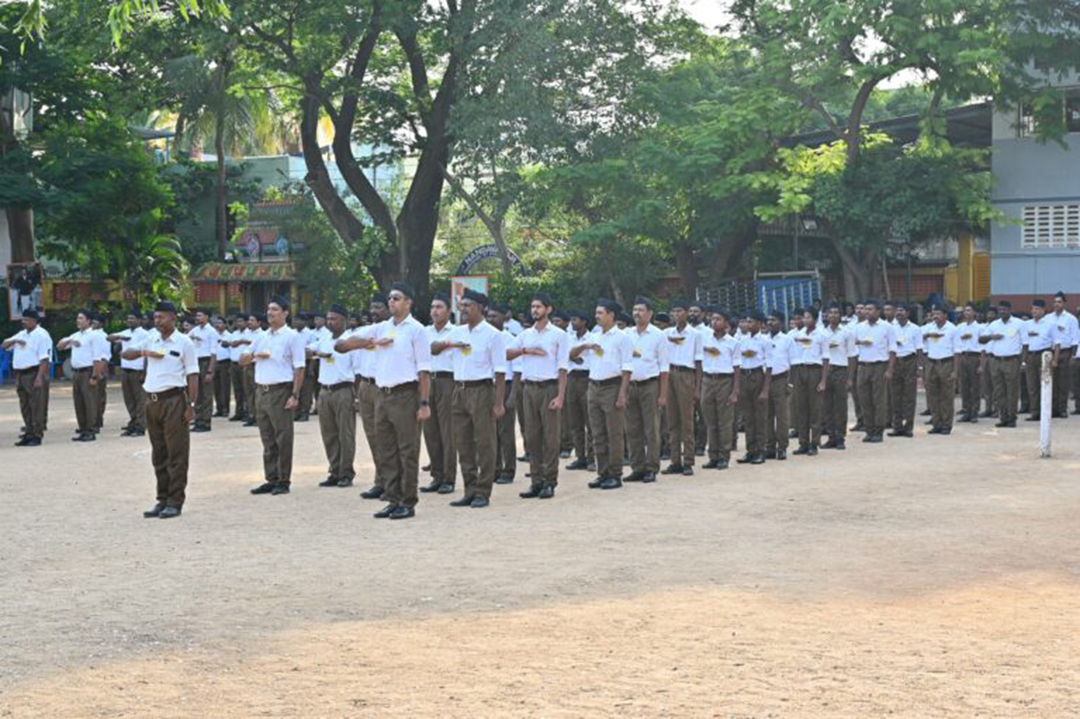
Bharat is not merely a geographic entity but a living embodiment of a civilizational soul, shaped by generations who saw Dharma as an intrinsic duty. Despite enduring internal and external trials, the nation’s enduring unity stems from a shared reverence for its heritage. In this spirit, the RSS’ Prarthana (prayer)—composed in 1940 at a pivotal organisational meeting in Wardha (in the Indian state of Maharashtra) —serves as the spiritual core of the Rashtriya Swayamsevak Sangh (RSS). Recited daily in Shakhas in Sanskrit, it reflects India’s civilizational ethos invoking strength, devotion, and selfless service. Like the Gayatri and Shanti Mantras (hymns), it elevates the individual into a collective consciousness rooted in duty to Dharma and the Motherland.
Role of Prayer in Hindu Dharma: A Path to Unity
In Hindu Dharma, prayer is a mindful way of connecting with the divine, and not just a ritual. Every auspicious occasion begins with a prayer for strength, well-being, and blessings. Mantras (sacred chants) carry spiritual energy that uplifts both the individual and the community. One of the most revered is the Shanti Mantra (Peace Invocation), which prays for peace, health, and happiness for all:
ओं सर्वे भवन्तु सुखिनः सर्वे सन्तु निरामयाः ।
सर्वे भद्राणि पश्यन्तु मा कश्चित् दुःखभाक् भवेत् ।।
ओं शांतिः शांतिः शांतिः ।।
Om Sarve BhavantuSukhinah, Sarve Santu Niraamayaah
Sarve BhadraaniPashyantu, Maa KashchitDukhabhaagBhavet
Om ShaantihShaantihShaantih
Vande Mataram and Nationalism: A Sacred Invocation
This spirit of prayer—seeking not only personal peace but universal harmony—is echoed in later expressions of devotion and patriotism that emerged during Bharat’s modern era. One such expression is Vande Mataram, composed by Bankim Chandra Chattopadhyay. Though literary in form, the song took on the character of a sacred mantra during the Indian freedom struggle, inspiring deep spiritual emotion and a sense of selfless sacrifice. It invoked the nation as a divine mother—nurturing, fertile, and sacred—thus blending the ideals of patriotism with the ethos of bhakti (devotion). By revering rivers, fields, and breezes, Vande Mataramsacralized the land and transformed political resistance into a dharmic commitment, uniting a diverse population under the shared spiritual identity of BhāratMātā.
At its core, Hindu prayer—whether Vedic or nationalist in formis an act of bhāva (spiritual emotion) and ātmanivedan (self-surrender). It is not confined to liturgy or performance, but aims to purify the mind, dissolve the ego, and align the self with the Divine. While individual prayer fosters inner transformation and resilience, collective prayer generates shared spiritual energy, creating a unifying force across communities.
The Spiritual Practice of the RSS: Sangh Prarthana
This same spiritual depth and transformative power of prayer is reflected in the collective discipline of the Rashtriya Swayamsevak Sangh (RSS). The Sangh Prayer has not only evolved over the years but also has an inspiring journey, which is explored in detail in the book Sangh Prarthana (Sampurna Vyakhya) by Vijay Kumar Gupta (Suruchi Prakashan). The book offers a profound portrayal of the dedication, inspiration, and transformative spirit behind the Sangh Prayer and its pivotal role in shaping the life and character of an RSS Swayamsevak (volunteer).
For readers’ reference, the full text of the Sangh Prayer along with its English translation is provided at the end of this article to aid deeper reflection and understanding.
Gupta explains that it serves as a sacred daily vow, reinforcing devotion, discipline, and dedication to national service, through which Swayamsevaks internalize the Sangh’s core ideals and commit themselves to Dharma and the Motherland.
Gupta further adds, “At the heart of Dr. Hedgewar’s vision for the Sangh was the idea of the Shakha,a daily gathering intended not only for physical training but also to nurture discipline, cultural grounding, and strong moral values in individuals.”
The Evolution of the Sangh Prayer: From Marathi to Sanskrit
Within this Shakha tradition, the Sangh Prayer was first introduced in the Marathi language, following the prevalent custom in Maharashtra at the time, where every akhara (physical training centre) included a Marathi prayer. Similarly, in northern India, the tradition of having a Vandana (prayer) in Hindi was common. Thus, both Marathi and Hindi prayers were introduced. At the end of the prayer, the udghosh (exclamation) used to be: “Rashtra Guru Shree Samarth Ramdas Swami Ki Jai.” It must be noted here that Samarth Guru Ramdas was a great inspiration behind the foundation of Hindavi Swaraj by Chhatrapati Shivaji Maharaj.
As the RSS expanded across India, it was felt that a change was needed. Song and prayer, by nature, evolve over time to reflect broader contexts and sentiments. To address this, a significant meeting was held in 1939 in a Sindhi village in the Wardha district of Maharashtra. This meeting was attended by RSS Sarsanghchalak Dr Keshav Baliram Hedgewar, Shri Guruji (MS Golwalkar), Appaji Joshi, Babasaheb Apte, BalasahebDeoras, Tantya Rao Telang, Vitthal Rao Patki, Babaji Salodkar, Krishna Rao Moharir, and Dr. Hedgewar’s friend Nana Sahab Talatule, among others.
After ten days of deep discussions, the gadyabhav (prose meaning) of the Sangh Prayer was composed. The final prayer consists of three shlokas (verses) with a total of twelve lines, followed by the thirteenth line as an udghosh: “Bharat Mata Ki Jai.” (Hail Mother India)
The prayer was ultimately rendered in Sanskrit. The thought behind opting for Sanskrit was that it is the language of the divine andeternal. It transcends regional and linguistic boundaries and fosters a spirit of cultural unity.
Each Swayamsevak is expected not only to pronounce the prayer accurately, but more importantly, to comprehend its deeper meaning. This understanding is essential, as the prayer is meant to infuse in the Swayamsevak a life of excellence (utkṛṣṭatā), depth (gāmbhīrya), and purity (pavitratā).
RSS Leaders’ Reverence for the Sangh Prayer: A Testament to its Importance
The spiritual and emotional power of this prayer is evident in the reverence it received from Sangh stalwarts. As cited in the book:
- Shri Guruji (M. S. Golwalkar), the second Sarsanghchalak, called the prayer the “soul of the Sangh.”
• Babasaheb Apte, another senior functionary who founded Vishwa Hindu Parishad (VHP), referred to it as the “heart” of the Sangh.
• Pandit Deendayal Upadhyay, an RSS and Bharatiya Jan Sangh (BJS) ideologue, even while deeply immersed in the responsibilities of political life, never allowed anything to interfere with his daily prayer. One day, in the middle of a packed schedule, he told a colleague:
“I must attend the prayer.”
He briefly stepped out, stood reverently to offer the prayer, and returned immediately to his work—a powerful example of discipline and devotion.
Another memorable incident mentioned in the book involves Shri Guruji during a time of serious illness. When someone suggested that he could offer the prayer from bed due to his weak health, his reply was firm and deeply inspiring:
“If the body cannot even perform the prayer, then perhaps it is no longer worth living.”
This episode highlights the absolute spiritual and moral centrality of the prayer in the life of a dedicated RSS Swayamsevak(volunteer).
Bharat Mata: Heart of the RSS’ Prayer
The prayer itself is not merely a personal invocation—it is a collective spiritual affirmation, deeply rooted in Bharatiyasamskāra(Indian cultural values), seeking divine strength, clarity of purpose, and inner resilience. It begins by saluting the Motherland—Bharat Mata(Mother India), described as jan-janani(people’s mother), the ten-armed Goddess, the personification of Shakti (divine feminine power), echoing deep traditional reverence.
It draws from ancient ideals. Quoting Bhagwan Ram (God Sri Ram), the prayer reminds us:
“Janani Janmabhoomishcha SwargadapiGariyasi”
(“Mother and motherland are greater than even heaven.”)
One may recall the deeply emotional moment of Swami Vivekananda, who upon returning to India from the West, touched the soil of Bharat (India) with his forehead, rolled in the dust and wept crying:
“Forgive me, Mother, for the impurities I may have gathered upon my head from foreign lands.”
Such anecdotes help to deepen the understanding of what Bharat Mata(Mother India) means to Swayamsevaks(dedicated volunteers of the Sangh): not just a piece of geography, but a sacred divine presence—a mother, a Goddess, a karmabhoomi(sacred land of duty and action).
The translated version of the Sangh Prayer in the book resonates with the powerful plea to the Almighty for strength, determination, humility, and unwavering devotion. It seeks the courage to walk the thorny path of righteousness, the unity of collective strength, and the ultimate blessing to establish and protect ‘Dharma’(cosmic order and righteousness), leading the nation to its highest glory.
___________________________________________________________________________________________
Note to Readers:
The following explanation is based on content from the book“Know about RSS” authored by Arun Anand.
प्रार्थना (Prayer )
नमस्ते सदा वत्सले मातृभूमे
त्वया हिन्दुभूमे सुखं वर्धितोऽहम्।
महामङ्गले पुण्यभूमे त्वदर्थे
पतत्वेष कायो नमस्ते नमस्ते॥१॥
प्रभो शक्तिमन् हिन्दुराष्ट्राङ्गभूता
इमे साधरं त्वां नमामो वयम्।
त्वदीयाय कार्याय बद्धा कटीयं
शुभामार्गेण नैश्चयं देहि तत्परम्।
अजैयां च विश्वस्य देही शक्ति
सुशीलं जगद्येन नम्रं भवेत्।
श्रुतं चैव यत्कण्टकाकीर्णमार्गं
स्वयं स्वीकृतं नः सुगं कारयेत्॥२॥
समुत्कर्ष निःश्रेयसस्यैकमुग्रं
परं साधनं नाम वीरव्रतम्।
तदन्तः स्फुरत्वक्षया ध्येयनिष्ठा
हृदन्तः प्रजागर्तु तीव्रानिशम्॥
विजेत्री च नः संहता कार्यशक्तिर्।
विधानाय धर्मस्य संरक्षणम्।
परं वैभवं नेतुमेतत् स्वराष्ट्रं
समर्था भवत्वाशिषा ते भृशम्॥ ३॥
भारत माता की जय
English transliteration:
Prārthanā
namaste sadāvatsalemātr̥bhūme
tvayāhindubhūmesukhaṁvardhito’ham।
mahāmaṅgalepuṇyabhūmetvadarthe
patatveṣakāyo namaste namaste॥1॥
prabhośaktimanhindurāṣṭrāṅgabhūtā
imesādaraṁtvāṁnamāmovayam।
tvadīyāyakāryāyabaddhākaṭīyaṁ
śubhāmārgeṇanaiścayaṁdehitatparam।
ajaiyāṁ ca viśvasyadehīśaktiṁ
suśīlaṁjagadyenanamraṁbhavet।
śrutaṁcaivayatkaṇṭakākīrṇamārgaṁ
svayaṁsvīkṛtaṁnaḥsugaṁkārayet॥2॥
samutkarṣaniḥśreyasasyekamugraṁ
paraṁsādhanaṁnāmavīravratam।
tadantaḥsphuratvakṣayādhyeyanīṣṭhā
hr̥dantaḥprajāgartutīvrāniśam॥
vijetṛī ca naḥsaṁhatākāryaśaktir।
vidhānāyadharmasyasaṁrakṣaṇam।
paraṁvaibhavaṁnetumetatsvarāṣṭraṁ
samarthābhavatvāśiṣātebhṛśam॥3॥
Bharat Mata ki Jai (Hail Mother India)
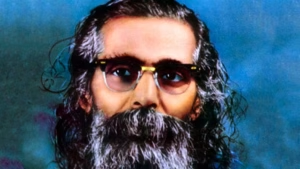
While several English interpretations of the RSS prayer exist, the most authoritative and meaningful one was given by the second Sarsanghchalak of the RSS, Madhav Sadashivrao Golwalkar.
Interpretation of the RSS Prarthana as explained by Guru Golwalkar
“Forever I bow to thee, O Loving Motherland! O Motherland of us
Hindus, Thou hast brought me up in happiness. May my life, O great
and blessed Holy Land, be laid down in Thy Cause. I bow to Thee again
and again. We the children of the Hindu Nation bow to Thee in
reverence, O Almighty God. We have girded up our loins to carry on
Thy work. Give us Thy Holy blessings for its fulfilment. O Lord! Grant
us such might as no power on earth can ever challenge, such purity of
character as would command the respect of the whole world and
such knowledge as would make easy the thorny path that we
have voluntarily chosen.
May we be inspired with the spirit of stern heroism, that is sole and
ultimate means of attaining the highest spiritual bliss with the greatest
temporal prosperity.
May intense and everlasting devotion to our ideal ever enthuse our
hearts. May our victorious organised power of action, by Thy Grace, be
wholly capable of protecting our dharma and leading this nation of
ours to the highest pinnacle of glory.”
(The writer is an author and columnist. She has a PhD in sociology)