International Mother Language Day: Indian Linguistic Diversity, and the RSS Position
Updated: February 20, 2026 17:35
India’s extraordinary linguistic diversity is reflected in its numerous mother tongues, each carrying unique cultural and historical significance. These languages are not merely tools of communication, they serve as repositories of civilisational memory, knowledge traditions, literary heritage, and social continuity. Language functions as a bridge between generations, transmitting cultural values and collective experience across time.
This civilisational function of language becomes especially visible in the transmission of shared cultural narratives. A striking example is the Ramayanawhich demonstrates how the mother tongue sustains and localises collective memory. From its Sanskrit origins, the life of Sri Ram was retold in Tamil, Awadhi, Bengali, Kannada, Marathi, Telugu, Malayalam, Odia and other regional languages, allowing the epic to enter everyday social life. By speaking to people in their own languages, the Ramayana ensured that its moral ideals and cultural memory were not only preserved but lived, enabling the story to cross regions and generations without losing its essence.
India is the most linguistically diverse country in the world. The lastCensus data recorded 19,569 reported mother-tongues,in 2011, which, after linguistic scrutiny, were rationalised into 1,369 identifiable mother tongues and 121 languages spoken by more than 10,000 people each. Despite this vast diversity, 96.71 per cent of the population speaks one of the 22 Scheduled Languages recognised by the Constitution, while the remaining 3.29 per cent uses other languages. This structure reflects India’s civilisational model. This multiplicity of mother tongues rooted in local culture, operate within a shared constitutional framework.
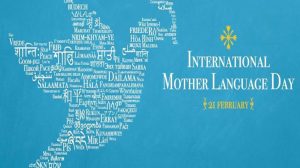
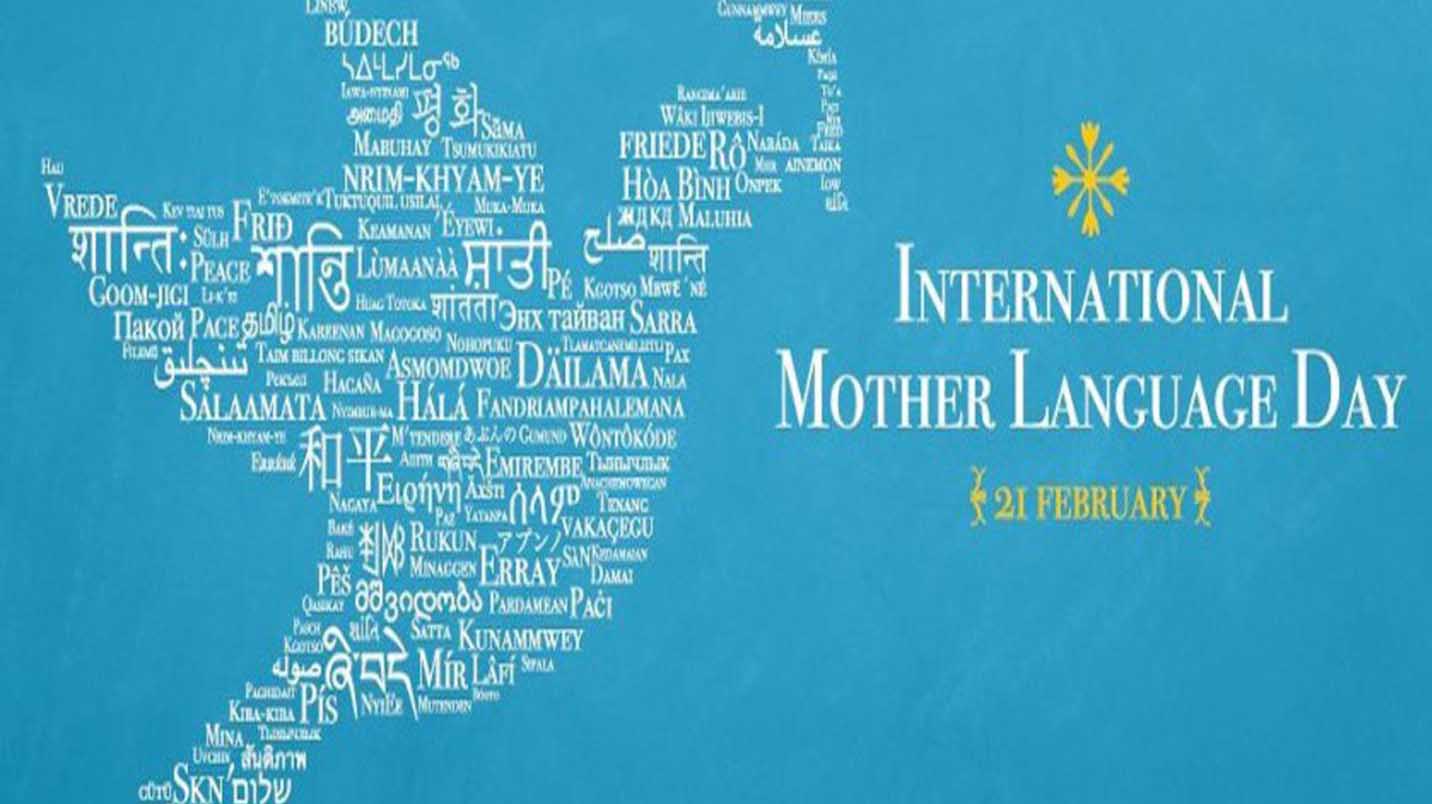
Matribhasha Diwas (Mother Language Day) is observed in India every year on 21 February, in alignment with UNESCO’s World Mother Language Day which commemorates the 1952 Bengali Language Movement. It has been observed throughout the world since 2000. While it is not a statutory national observance, the day is increasingly marked by celebrations carried out by universities, schools, literary and cultural institutions, language academies, and civil society organisations.
The government of India through its Ministry of Education observes Matribhasha Diwas across the country to promote the use of mother tongues and Indian languages in education, knowledge creation, and national development. The initiative aims to strengthen proficiency in mother tongues, encourage translation and technological adaptation in Indian languages, and motivate citizens to learn additional Indian languages. Educational institutions under Central and State governments are encouraged to organise seminars, lectures, workshops, and student competitions highlighting linguistic diversity and the need to preserve mother tongues. Higher Education Institutions are also urged to integrate Indian languages into teaching, learning, and research activities in alignment with the National Education Policy (NEP) 2020, which emphasises multilingualism and the promotion of Indian languages in academia.
RSS and Indian Languages
The Rashtriya Swayamsevak Sangh (RSS) has consistently emphasised the centrality of the mother tongue in education and social life. The underlying principle of Matribhasha(mother tongue)has long been reflected in the organisation’s thinking, resolutions, and public articulation. The RSS views the use of the mother tongue not as a symbolic commemoration, but as a sustained cultural and educational responsibility.
The organisation has repeatedly maintained that all Indian languages are national languages and that no single Indian language is above the other. This position was reiterated by RSS Akhil Bharatiya Prachar Pramukh(All India in- charge of media) Sunil Ambekaron July 7, 2025 during a press interaction following Akhil Bharatiya PrantPracharak Baithak (All-India meeting of state level full time workers) in New Delhi. He stated that the RSS believes primary education should be imparted in the mother tongue, as learning in one’s own language supports natural comprehension and cognitive development. He also clarified that this approach has long been part of the organisation’s thinking.
This emphasis on mother-tongue education is reflected formally in resolutions adopted by the highest decision-making body of the RSS called Akhil Bharatiya Pratinidhi Sabha (ABPS). In its 2015 resolution on education in the mother language, the ABPS supported the study of multiple languages, including foreign languages, while stating that elementary education should preferably be conducted in the mother tongue or constitutionally recognised state languages. The resolution described language as both a medium of communication and a carrier of culture and values and noted that early education through a foreign language can distance learners from their social and cultural environment. It also referenced recommendations of education commissions such as the Radhakrishnan and Kothari Commissions, which advocated mother-tongue instruction at the foundational stage.
ABPS called upon the Union Government and State Governments to review their present language policies and ensure effective system to impart education in mother language or in constitutionally recognised state languages and simultaneously take initiative for use of Bharatiya languages in education, administration and delivery of justice.
More recently in 2018, the ABPS adopted a separate resolution focused on the protection and promotion of Bharatiya languages. This resolution identified language as a key component of individual and collective identity and drew attention to the decline in the usage of several Indian languages and dialects, some of which face extinction. It called upon governments, educational institutions, and civil society to promote primary education in the mother tongue or another Bharatiya language, expand availability of higher education and technical material in Indian languages, increase their use in administration and judicial processes, and encourage everyday use of the mother tongue within families, alongside respect for linguistic diversity. At the same time, it acknowledged the importance of learning global languages, while cautioning against their displacement of Indian languages.
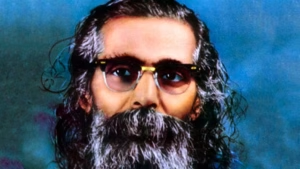
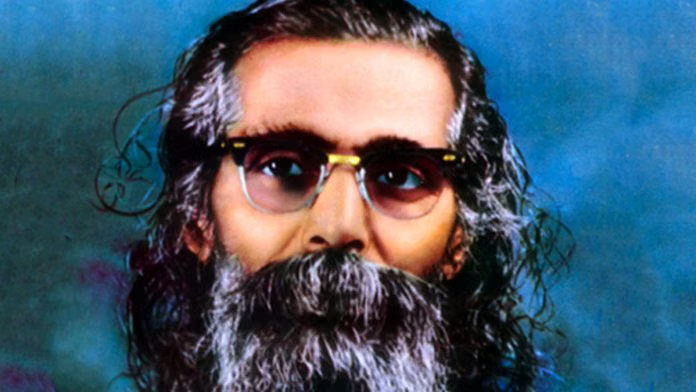
Well before the adoption of these resolutions, MS Golwalkar, the second Sarsanghchalak (chief mentor) of the RSS, had articulated a similar approach.In an interview with Organiser in the late 1950s, Golwalkar stated that all Indian languages are national languages and should be seen as expressions of a shared cultural ethos. He also linked the medium of education to social continuity. He had also warned that an education system dominated by a foreign language could alienate the educated class from society and everyday life. His emphasis was on ensuring that foundational learning remained connected to the learner’s linguistic and cultural context.
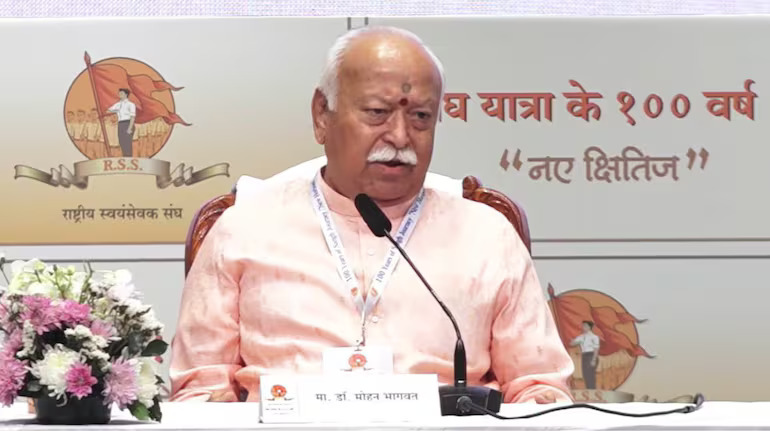
More recently, in August 2025, RSS Sarsanghchalak Mohan Bhagwat addressed questions on language during a three-day lecture series in New Delhi marking 100 years of the RSS. Responding to a query during the question and answer session, he stated that all Bharatiya languages are national languages and that, for mutual communication, a common language is necessary, which should not be foreign.
Across organisational resolutions, interviews, and contemporary public statements, the RSS position on Matribhasha(mother tongue)demonstrates continuity rather than episodic engagement. The emphasis remains on early education in the mother tongue, equal respect for all Indian languages, and multilingual learning without cultural displacement. Rather than linking language to symbolic observances alone, the organisation has addressed it primarily through policy positions, educational thought, and long-term cultural perspective.
(The writer is an author and columnist)