Guru Purnima: The Saffron Flag and the Spirit of Service
Updated: July 9, 2025 13:18

In the landscape of Indian festivals often marked by spectacle and celebration, Guru Purnima stands apart as a day of inward reflection and reverence. Traditionally observed to honour one’s Guru, whether spiritual, philosophical, or academic it underlines the guiding role of wisdom in a seeker’s life. The Rashtriya Swayamsevak Sangh (RSS) brings a distinctive dimension to this tradition, shifting the focus from personal veneration to the worship of principles. Its observance is not celebratory but contemplative, a disciplined reaffirmation of seva and alignment with Rashtra Dharma(duty towards the nation).
From Vyasa to theSaffron Flag: Reframing the Concept of Guru
Guru Purnima is traditionally associated with Maharshi Ved Vyasa, the sage who compiled the Vedas (ancient scriptures) and composed the Mahabharata. Honoured as the Jagat Guru (Universal preceptor) Ved Vyasa offered a vision of Dharma that harmonised thought and conduct, guiding generations across Bharat and beyond. The day commemorating him called Vyasa Purnima is observed as Guru Purnima, a moment to pay homage to the Guru as the revealer of truth and dispeller of ignorance.
The RSS interprets this tradition through a unique philosophical lens.
The Saffron Flag
The saffron flag, has held the place of Guru(preceptor) in the RSS since 1928. When some swayamsevaks(volunteers) wished to revere Dr. Hedgewar as Guru, he firmly declared that no individual however revered should occupy that role. Only the saffron flag, representing timeless principles, would be the Guru. This choice was not symbolic alone but was a conscious commitment to uphold eternal ideals over individual charisma.
This tradition was formally institutionalised on Vyasa Purnima in 1928 during the first Guru Puja, one of the six annual RSS festivals. Since then, the Saffron Flag has remained the highest ideal within the organisation, even above the Sarsanghchalak (chief mentor).
There is a book titled BhagwaDhwaj (Saffron Flag), written by N.H. Palkar was then Maharashtra Karyavah (executive in-charge) of the RSS. This bookis regarded as the earliest and most authoritative work on the organisation’s flag. First published in Marathi in 1958 and later in Hindi was published by Suruchi Prakashan, the 76-page monograph traces the saffron flag’s origins to the Vedic era. Palkar wrote:
“The Saffron Flag has always been respected in the Hindu social life…it finds mention in Vedic literature as ‘Arunketu’ (flag of dawn).”
He described how it served as a unifying force across epochs:
“Guru Gobind Singh…also wielded a Saffron Flag. The Saffron Flag is a symbol of revival of Hindu Dharma… Rana Sanga, Maharana Pratap, and Chhatrapati Shivaji fought under the Saffron Flag to establish Hindu rule.”
“The Saffron Flags flutter on the top of innumerable temples and (Hindu) monasteries of India.”
He concluded emphatically:
“After going through the complete history of ‘BhagwaDhwaj’, one realises that it is not possible to separate the Hindu society from this flag. It is the natural symbol of Hindu society.”
These reflections continue to guide the intellectual grounding of swayamsevaks in shakhas and training camps, where ideology in place of personality is placed at the centre of moral formation.
Guru Puja in the RSS: A sense of Responsibility
The first formal Guru Puja(worshipping the Guru) in the RSS was held in 1928, marking the ceremonial reverence of the Saffron Flag as the Guru. Far from being a symbolic gesture, the observance was intended as a disciplined tradition of self-assessment and recommitment to national and cultural service.
Held annually on Ashadha Purnima (full moon day in the Hindu lunar month of Ashadha (June–July), Guru Puja is observed in every RSS shakha across the country. It comprises of:
- Worship of the Saffron Flag, adorned and elevated as the spiritual and ideological centre.
- Guru Dakshina, a voluntary and anonymous contribution by swayamsevaks to fund RSS activities. Introduced by Dr. Hedgewar in 1928, this tradition consciously avoided external patronage. It ensured that all contributions made to the flag as Guru were free of personal ego or transactional expectations. As such, Guru Dakshina became not just an act of support, but a reaffirmation of seva rooted in inner discipline and self-reliance.
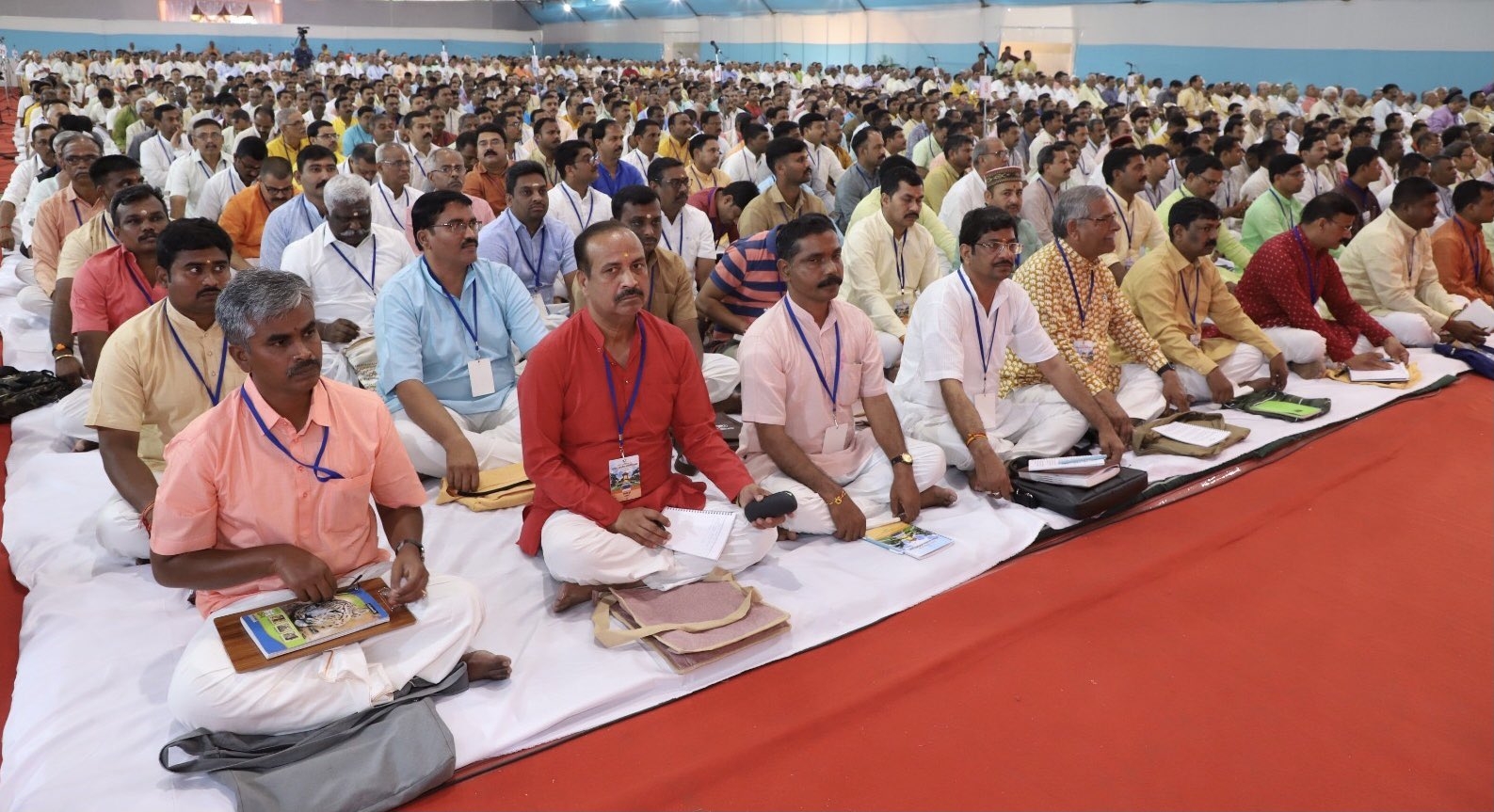
- Bauddhik(intellectual) sessions, where senior swayamsevaks reflect not on achievements, but on collective duties and the work that lies ahead.
Each element of this festival acts as a form of institutional and spiritual recalibration. The question swayamsevaks are encouraged to ask is how far they have walked in alignment with the ideals symbolised by the saffron flag.
Two Traditions, One Principle: Renunciation over Recognition
In the Rashtriya Swayamsevak Sangh, the practices of revering the Saffron Flag as Guru and offering Guru Dakshina (offerings to the Guru) may appear distinct, yet they are bound by a common philosophical thread. Both traditions emphasise principles over personalities, and duty over display. By placing the saffron flag, which is a symbol of tyag (sacrifice), seva (service), and sankalp (resolve)at the centre, the RSS consciously shifts focus from individual veneration to collective ideals.
Guru Dakshina, offered anonymously complements this ethos. It is not merely a financial act but a personal reaffirmation of one’s responsibility to the nation devoid of donor ego or public recognition.
These practices promote self-reliance and minimize the distinction between giver and receiver. They contribute to a decentralized structure rooted in value-based service and consistent ethical principles. The RSS has developed as a civilisational movement shaped not by individual charisma or financial mobilization, but by organizational discipline and long-term continuity. Its framework avoids personality cults and instead emphasizes adherence to enduring ideals, focusing on the practice of dharma over symbolic display.
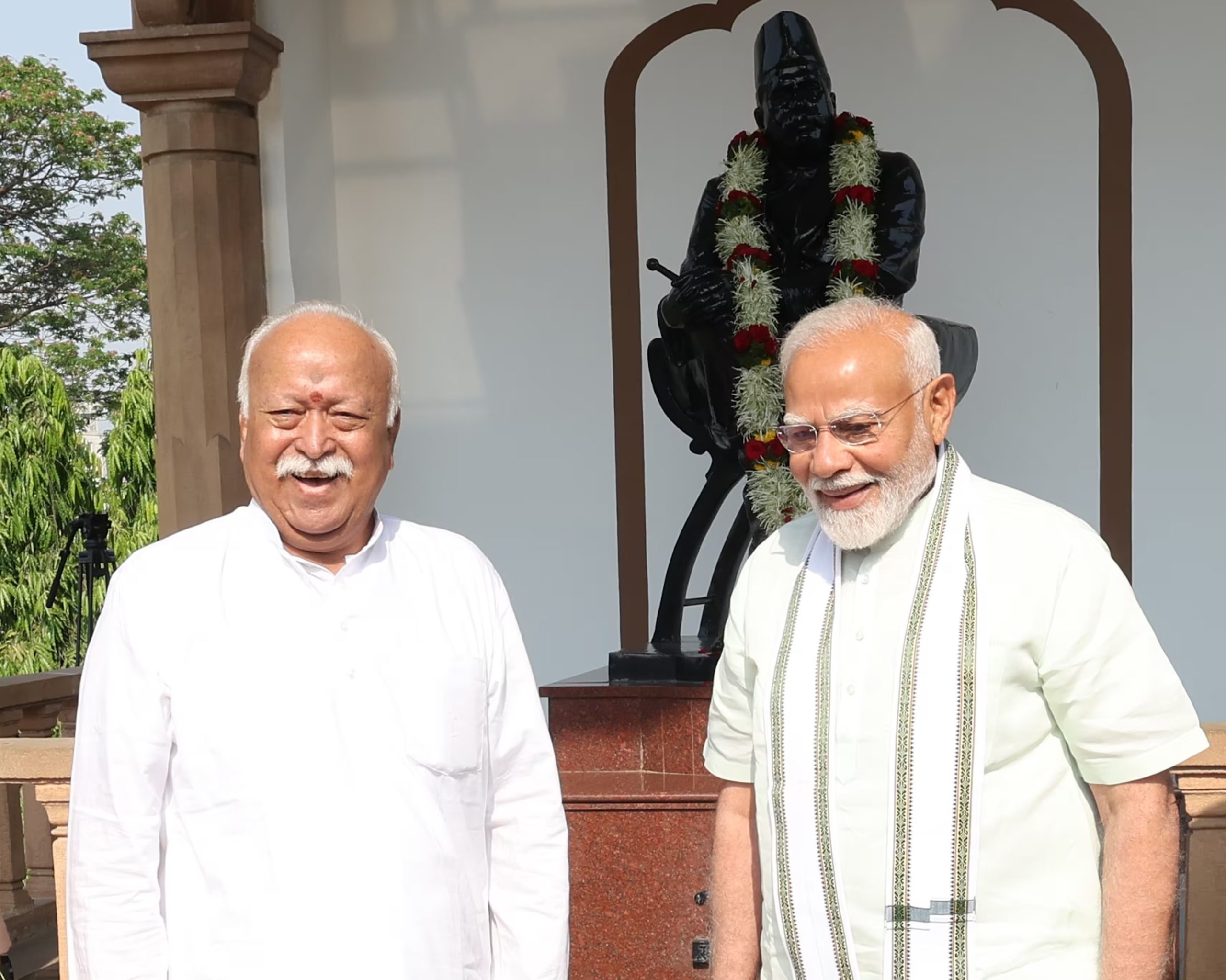
This spirit was echoed by RSS Sarsanghchalak Mohan Bhagwat recently at the launch of the book Sangh Jeevan Vol I and II, in Nagpur on June 7, 2025, when he remarked:
“The growth and acceptance of the Rashtriya Swayamsevak Sangh (RSS) today is the result of tireless efforts by countless unnamed swayamsevaks who worked selflessly for decades.”
(The writer is an author and columnist)