A Life of Quiet Strength: Pramila Tai Medhe and the Enduring Legacy of Rashtra Sevika Samiti
Updated: August 1, 2025 22:15

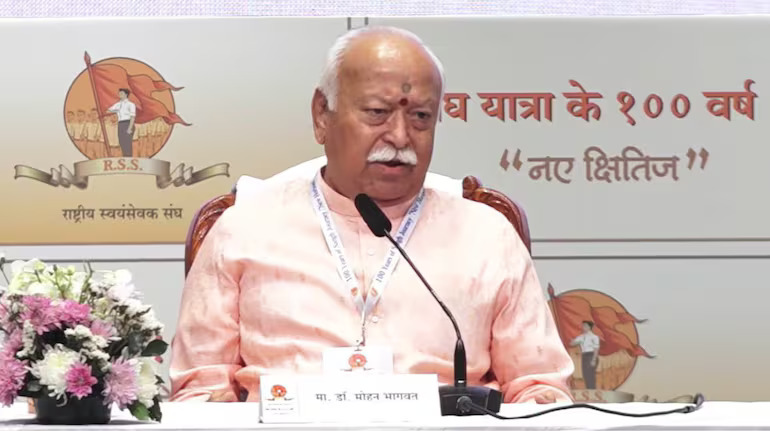
The passing of Pramila Tai Medhe on July 31, 2025, in Nagpur at the age of 96 marked the end of a remarkable chapter in the journey of Rashtra Sevika Samiti—an organisation she had served with unwavering dedication for over eight decades. A flood of tributes followed her demise, including a heartfelt message from Rashtriya Swayamsevak Sangh (RSS) Sarsanghchalak Mohan Bhagwat, who noted, “The shadow of affection that all workers experienced in her presence has vanished. She worked tirelessly from the early days, often standing alone in difficult times and dedicating her life to the cause.”
Medhe’s life mirrored the quiet but resolute strength that has come to define the Rashtra Sevika Samiti—an autonomous, RSS-inspired organisation that has remained focused on grassroots work, often away from media attention. It is often wrongly described as the “women’s wing of the RSS.” In reality, the Samiti has always been independent in structure and function, though it shares the larger ideological foundation of Hindu cultural nationalism with the RSS and other like-minded organisations. Over the years, it has established a widespread national presence with thousands of daily shakhas (units) for women, community service projects, and training programs that aim to empower women as leaders, nurturers, and nation-builders.
A Lifelong Commitment
Pramila Tai Medhe, who served as Pramukh Sanchalika (chief mentor) of the Samiti from 2006 to 2012, first attended a Samiti Shakha in 1939—just three years after the organisation was founded. From that moment, her path was set. She worked closely with the founder Laxmibai Kelkar and the early generation of sevikas, dedicating her entire life to the vision of an empowered, culturally rooted Indian womanhood. Medhe represented the seamless blending of service, discipline, and ideological clarity that the Samiti has sought to nurture in its volunteers.
The Vision of Laxmibai Kelkar
The roots of the Rashtra Sevika Samiti go back to 1936, when Laxmibai Kelkar, a noted educationist from Nagpur, approached Dr. Keshav Baliram Hedgewar, the founder of the RSS. Impressed by the Sangh’s work among men, she suggested a similar platform be created for women to contribute to national awakening. Hedgewar encouraged her to go ahead independently. On the auspicious occasion of Vijayadashami in 1936, Kelkar laid the foundation of the Rashtra Sevika Samiti.
From its inception, the organisation was guided by its own leadership structure and focused approach. Kelkar led the Samiti until her passing in 1978. She was succeeded by Saraswati Apte (1978–1994), then Usha Tai Chati (1994–2006), followed by Pramila Tai Medhe (2006–2012). The current Pramukh Sanchalika is V. Shantha Kumari, who assumed leadership in 2012.
Historical Role and Contributions
The Rashtra Sevika Samiti has played an active role during key phases of India’s modern history. During the freedom struggle, its volunteers participated in protests and underground activities. At the time of Partition in 1947, Samiti workers were actively involved in rescuing and rehabilitating Hindu and Sikh families affected by the violence. Alongside the RSS, they provided relief in refugee camps and worked tirelessly to restore the dignity and security of displaced women and children.
The post-independence years saw the Samiti continue its engagement with national causes. During the 1962, 1965, and 1971 wars, sevikas mobilised support for soldiers and their families. During the Emergency (1975–77), Samiti members actively joined the resistance movement. Several volunteers were jailed for protesting against the government’s authoritarian measures. The Samiti also participated in the Ram Janmabhoomi movement and continues to support social work and cultural awareness initiatives in neglected regions, particularly the Northeast.
Philosophy and Organisational Structure
The Samiti’s work is guided by three core principles—Matrutva (Universal Motherhood), Kartrutva (Social Responsibility), and Netrutva (Leadership). These pillars form the ideological base of its training and community programs. The organisation seeks to mould women who are self-aware, socially conscious, and spiritually rooted. A Samiti sevika is trained to become a nurturer of values, an efficient organiser, and a silent but effective leader in her family, community, and society.
The Samiti operates through Shakhas, held daily or weekly, where women gather for prayers, Sanskrit shloka recitations, yoga, physical games, and group discussions. The prayer in the Samiti Shakha differs from that of the RSS, reflecting its unique spiritual emphasis and feminine energy. Over 5,000 shakhas function today across India, and regular residential training camps are conducted for deeper ideological and leadership training. More than 10,000 women attend these camps annually.
The organisation’s full-time workers, known as Pracharikas, travel across the country to expand and support the Samiti’s work. These women dedicate several years of their lives—often foregoing marriage and conventional careers—to live among communities, conduct shakhas, and lead service projects.
Seva: The Core of the Mission
At the heart of the Samiti’s work lies seva—selfless service. It currently runs more than 45 healthcare projects, nearly 500 educational initiatives, and over 480 women’s self-help groups across India. These projects are designed to uplift and empower women and children from financially and socially disadvantaged backgrounds.
One of the most well-known initiatives is Bal Gokulam, a cultural education program for children aged five and above. It helps them stay connected to India’s spiritual heritage through yoga, devotional music, storytelling, art, and recitation of Sanskrit verses. These centres operate in urban and rural areas alike and serve as nurturing grounds for future citizens grounded in dharma and values.
Another flagship project is the Devi Ahilyabai Smarak Samiti (DASS). This is a rehabilitation and empowerment centre for women and girls who have faced violence or trauma. Here, survivors are given food, shelter, education, and vocational training. Over four to five years, many of them regain self-confidence and eventually return to society as independent, contributing citizens. Several go on to create similar centres in their own communities.
A Legacy That Lives On
In 2016, during the Samiti’s 80th anniversary celebrations, one of the largest ever training camps was organised, bringing together 3,000 sevikas. The event was not just a milestone in numbers, but a testament to the enduring relevance and strength of the organisation founded in 1936 with a vision far ahead of its time.
Pramila Tai Medhe’s life was a bridge between the founding years of the Samiti and its expansive present. Her calm presence, deep commitment, and strategic guidance helped the organisation maintain its rootedness while adapting to changing times. She rarely sought public attention, but her work quietly transformed the lives of thousands.
Her passing is a moment for reflection—not only on the contributions of one individual but on the quiet power of an institution that has shaped generations of women with a vision of cultural pride, social service, and national reconstruction.