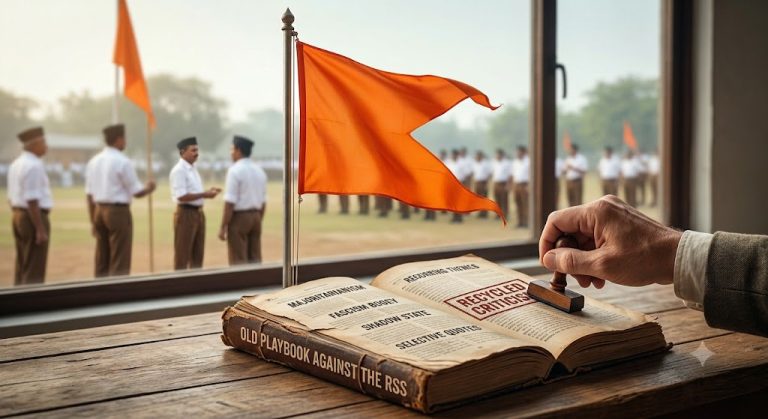
For decades, the Rashtriya Swayamsevak Sangh (RSS) has been at the centre of public debate over its relationship with the Constitution of India. While critics have often relied on selective readings or ideological assumptions, the Sangh’s own statements—made consistently across time, forums, and leadership levels—offer a clearer picture of how it understands the constitutional framework of the Republic.
It would be appropriate in this context to trace the RSS’s thinking on the Indian Constitution through authoritative statements of its senior functionaries. From reaffirming unwavering commitment to constitutional supremacy, national unity, and social justice, to articulating a civilisational reading that locates the Constitution within the broader ethos of Hindu Dharma, the RSS presents a perspective that sees no contradiction between constitutional democracy and India’s indigenous philosophical traditions. Together, these views outline how the Sangh interprets the Constitution not merely as a legal document, but as a living expression of Bharat’s civilisational values.
“We the People Have Given Ourselves This Commitment”
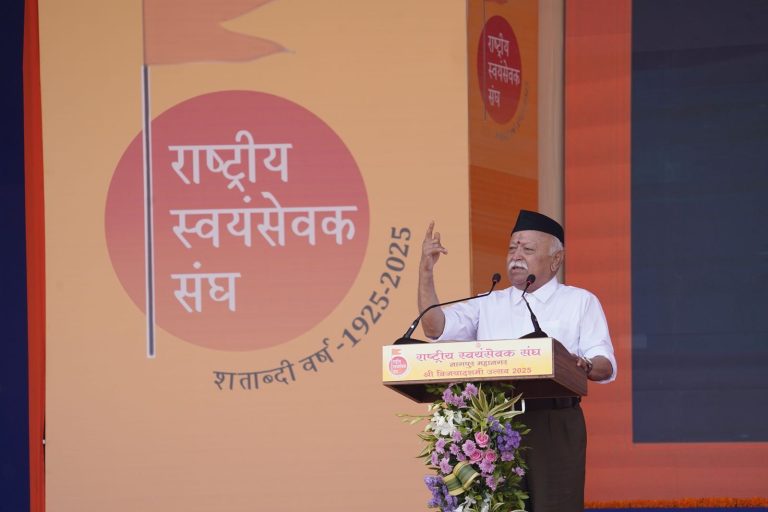
Addressing swayamsevaks (RSS volunteers) and other prominent persons in Nagpur on Vijayadashami on 12 October 2024, RSS Sarsanghchalak(Chief Mentor) Mohan Bhagwat reaffirmed the organisation’s constitutional commitment.
“We the people of Bharat have given ourselves this commitment to the Constitution,” he said, stressing that laws and rules must be followed both in letter and spirit. Bhagwat also emphasised the importance of constitutional awareness, stating that the Preamble, Directive Principles, Fundamental Duties, and Fundamental Rights should be widely understood by the public.
These remarks reflect the RSS leadership’s position that constitutional literacy and national unity are central to India’s democratic functioning.
RSS Rejects Caste Divisions, Emphasises Social Unity
RSS Sarkaryavah (General Secretary) Dattatreya Hosabale has also reiterated that the Sangh is inclusive and transcends social divisions.
“The Sangh includes people from all traditions, sects and castes… Caste is never a topic of discussion in the Sangh,” Hosabale said on the sidelines of the meeting of the Akhil Bharatiya Pratinidhi Sabha (ABPS), the organisation’s highest decision-making body, held in Nagpur on 29 March 2024.
Support for Constitutional Reservations, Opposition to Religion-Based Quotas
The RSS has consistently supported reservations as provided under the Constitution. Mohan Bhagwat reiterated this stance while addressing the inauguration of the Vidya Bharati Vignana Kendra in Hyderabad on 29 April 2024.
“The Sangh offers its full support to all forms of reservations offered by the Constitution. Whoever has been given reservations should continue to have them,” Bhagwat said.
At the same time, he clarified the organisation’s opposition to religion-based reservations. “Religion-based reservation is not acceptable. It was never part of our Constitution,” he noted, adding that reservations based on social and educational backwardness are both necessary and justified to ensure social justice.
Constitution Rooted in Hindu Dharma: RSS Perspective
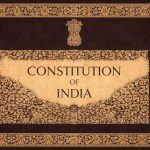
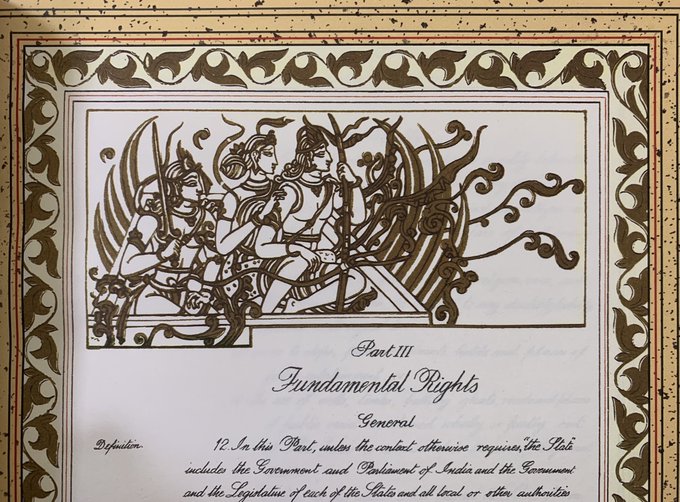
According to the RSS, Hindu Dharma forms the civilisational foundation of the Indian Constitution. This, it argues, is also symbolically reflected in the original Constitution manuscript, which contains artistic depictions inspired by Hindu deities and ancient Hindu history.
A speech delivered by Sangh’s Sah Sarkaryavah (joint general secretary) Arun Kumar, further highlights how the organisation interprets the philosophical basis of the Constitution.
“The core sentiment of Hindu Dharma is reflected in our Constitution. The background of our Constitution is rooted in Sanatan thoughts and values,” says Kumar, adding that while certain administrative structures were borrowed from the British, many constitutional principles are indigenous.
Fraternity as the Soul of the Constitution
Kumar highlighted the Preamble as the most significant feature of the Constitution, describing it as an expression of Hindu Dharma.
“Our Republic set out to secure Justice, Liberty and Equality. But the means to achieve these goals is fraternity, which is central to Hindu Dharma,” he explained.
He further elaborated that fraternity, or bandhutva, implies an unbroken bond of brotherhood. Quoting the ancient phrase “Mata Bhumi Putro’ham Prithivyam” (The Earth is my mother and I am her son), Kumar said this civilisational idea binds all Indians as equals.
“This sense of brotherhood is a unique feature of Bharat. There is no concept of big or small—everyone is connected by the land,” he said
Conclusion
Taken together, these statements illustrate a consistent and coherent RSS approach to the Constitution of India—one that affirms its supremacy as the governing framework of the Republic while interpreting its spirit through India’s civilisational ethos. Far from viewing the Constitution as an alien or imposed document, the RSS sees it as organically aligned with the principles of Hindu Dharma, particularly fraternity, social harmony, and justice. By emphasising constitutional literacy, equality beyond caste, support for social justice measures, and a unifying sense of national brotherhood, the Sangh presents a perspective in which constitutional democracy and Bharat’s cultural foundations are not in conflict but mutually reinforcing.
(The writer is a senior journalist and independent commentator)