Role of RSS in Relief and Rehabilitation of Hindu Refugees After Partition
Updated: December 3, 2025 0:58
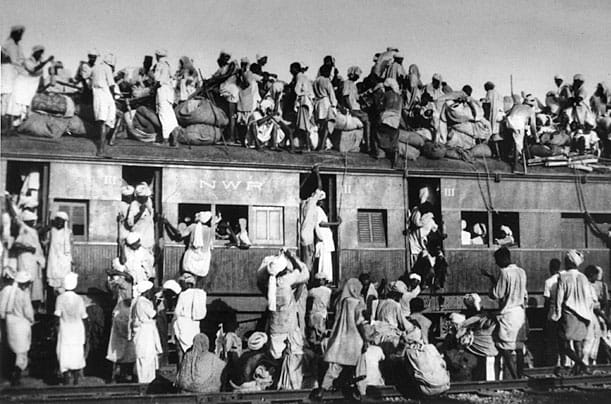
The Partition of India in 1947—creating the two nations of India and Pakistan—triggered one of the largest mass migrations in world history. Millions of Hindus and Sikhs were uprooted from their homes in West and East Pakistan (now Bangladesh) and forced to seek refuge in India. Amid this unprecedented humanitarian catastrophe, the Rashtriya Swayamsevak Sangh (RSS) played a critical role in rescue operations, relief work, and long-term rehabilitation.
Widespread Relief Operations Across Northern India
The RSS was quietly but vigorously engaged in bringing Hindu and Sikh families safely to India and organising relief and rehabilitation for them. Relief camps were set up across Punjab, Jammu & Kashmir, Rajasthan, Delhi, and West Bengal, providing food, shelter, clothing, and medical assistance.
A central role in northern India was played by the Punjab Relief Committee, originally established in Lahore. As refugees crossed over, the committee shifted to India and rapidly expanded across Punjab, later extending its operations into Jammu & Kashmir and Delhi. The Amritsar branch, one of its most active arms, established multiple relief and rehabilitation centres in Tarn Taran, Khemkaran, Attari, Ajnala, Dera Baba Nanak, and several border regions to receive incoming refugee families.
The period before and immediately after Partition saw a surge of young and middle-aged men joining the RSS. The organisation had a strong presence in cities and towns such as Rawalpindi, Lahore, Peshawar, Amritsar, Jalandhar, and Ambala. Sindh alone had about 80 shakhas at the time, supported by 52 pracharaks, including individuals who would later rise to prominent positions in national public life.
Why Refugees Trusted RSS Workers
An illuminating account by former RSS pracharaksManik Chandra Vajpayee and Sridhar Paradkar in Partition-Days: The Fiery Saga of RSS illustrates the trust refugees placed in RSS workers during the crisis.
In Amritsar, while both the RSS and the Congress organised relief camps, refugees arriving from West Punjab overwhelmingly gravitated toward RSS volunteers. Many arriving families refused to even interact with Congress workers, expressing anger at political failures and recalling that RSS swayamsevaks had risked their lives to rescue them from hostile regions.
The scene at Amritsar railway station became emblematic: when volunteers wearing white caps (Congress workers) approached newly arrived refugees, they often declined assistance, insisting they would go only with the “Black Caps”—RSS swayamsevaks—who had escorted them safely to India.
Relief Work in Eastern India: The VastuharaSahayata Samiti
In eastern India, particularly in West Bengal and Assam, the RSS’s relief efforts were organised through the VastuharaSahayata Samiti, established in February 1950 in Calcutta. This was formed in response to the massive influx of refugees from East Bengal.
The conditions at Sealdah railway station during this period were harrowing. Trains from East Bengal terminated there, and thousands of destitute refugees—robbed of belongings and uprooted from their homes—were forced to live on the platforms. RSS swayamsevaks stepped in to provide food, clothing, and temporary shelter, working day and night in these extremely challenging circumstances.
To support these efforts, a nationwide appeal was issued by MS Golwalkar (Shri Guruji), urging citizens to contribute generously. Lakhs of copies of this appeal were distributed across India, resulting in a steady flow of assistance from all corners of the country. The VastuharaSahayata Samiti ultimately collected ₹8,56,685, a substantial sum for that era.
Impact: Relief, Livelihood Support, and Rehabilitation
The VastuharaSahayata Samiti’s consolidated report highlights the scale and depth of the rehabilitation work:
- 80,000 refugees were provided with meals
- 1,500 bales of clothing reached over 1,50,000 people
- 3,225 families were helped to secure government or private jobs
- 300 fisher families received nets and essential equipment
- 1,390 families were provided land for agriculture
- 1,200 refugee families in Assam were settled with land for tea plantations or farming
The Samiti also established training centres to teach refugees skills such as plastic sculpture and cottage industries, helping them achieve financial independence. It set up two primary schools in Bali and eight in Howrah within refugee colonies; these institutions were later handed over to the government.
Government Apathy and the Burden on Relief Volunteers
Despite the magnitude of the crisis, official response—especially in Assam—was often inadequate. The provincial government was reluctant to allow non-official committees to assist refugees, arguing that it was the Centre’s responsibility and even suggesting that refugees might eventually be sent back to Pakistan. This lack of support meant that both the relief and rehabilitation responsibilities fell almost entirely on voluntary organisations such as the RSS-supported Vastuhara Samiti.
Conclusion
The work undertaken by the RSS during and after Partition—rescue operations, border evacuations, relief camps, national fundraising, skill-building programmes, and long-term rehabilitation—constitutes an important but often under-acknowledged chapter of India’s humanitarian history. In a time of widespread violence, displacement, and state-level inadequacies, the Sangh’s disciplined volunteer network provided vital support, dignity, and security to countless Hindu and Sikh refugees struggling to rebuild their lives.
(The writer is a senior journalist)