
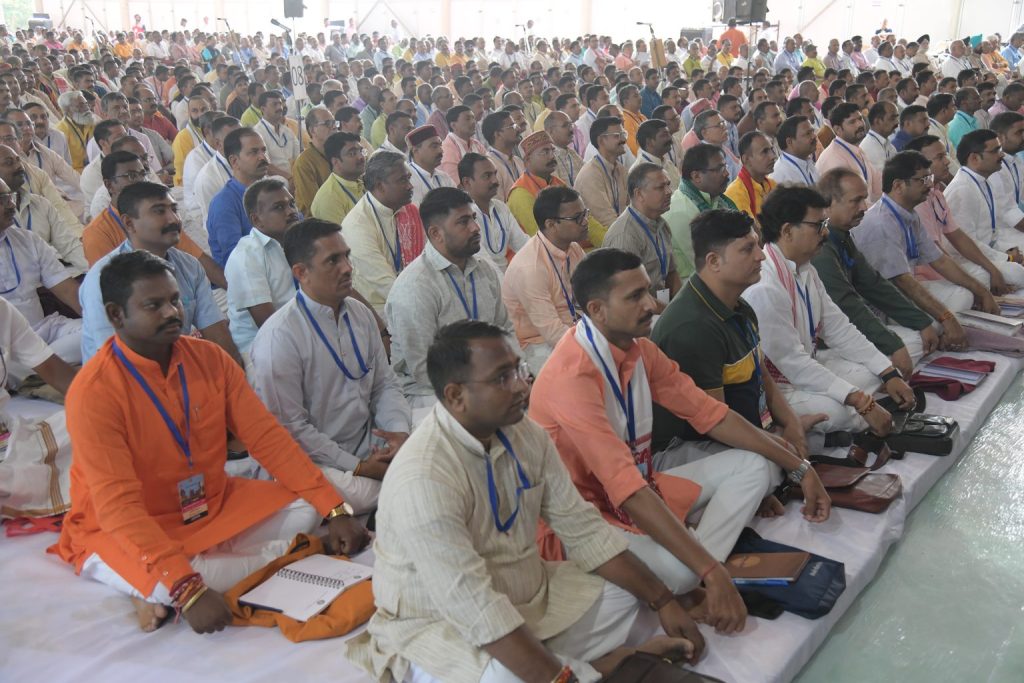
Akhil BharatiyaPratinidhi Sabha (ABPS) is the highest decision-making body of the Rashtriya Swayamsevak Sangh (RSS). It can be broadly translated as ‘All India Representative Council’.
The ABPS takes all major organisational decisions and reviews the direction of the Sangh’s work. It generally meets once a year for three to four days, usually in March, and is attended by the top leadership of the RSS including the Sarsanghchalak (Chief Mentor) and the Sar Karyavah (General Secretary).
The Sabha reviews the work of the previous year and outlines the priorities, programmes and policies for the coming year. It also deliberates on national issues and matters related to society.
Who Presides Over the ABPS?
The Sar Karyavah (General Secretary) functions as the executive head of the ABPS and presides over its proceedings.
The ABPS comprises around 1,500 delegates, including:
- Elected representatives from PrantiyaPratinidhi Sabhas (provincial units)
- Members of the Akhil BharatiyaKaryakari Mandal (All India Executive Committee)
- Senior RSS functionaries from the Prant (provincial) level and above
- Invited representatives from RSS-inspired organisations
There are around 32 organisations inspired by the RSS, and their representatives are also invited to participate in the discussions.
The organisational structure of the RSS divides the country into regions (zones) and prants (provinces). Each region includes multiple provinces depending on the number of RSS shakhas operating in that area.
How is the ABPS Constituted?
The Sar Karyavah is elected every three years.
The delegates to the ABPS are chosen through a multi-layered democratic process:
- Representatives are elected from regional units.
- These regional units are themselves elected by swayamsevaks from the shakha level, which is the basic organisational unit of the RSS.
- Typically, one representative is chosen for every 50 active swayamsevaks.
Apart from elected delegates, Sanghchalaks (provincial mentors) and Pracharaks (full-time workers) from various regions also participate in the Sabha.
How Does the ABPS Function?
The ABPS works on the principle of consensus rather than simple majority voting.
During the meeting:
- The Sar Karyavah presents the annual organisational report.
- Delegates discuss the progress made in the previous year.
- Key challenges faced by the organisation and society are examined.
- Strategies and priorities for the coming year are decided.
Resolutions are also passed on issues related to national interest, social harmony, organisational expansion and contemporary developments.
After the meeting, delegates return to their respective regions with guidance on the broad direction of the Sangh’s work, which is subsequently communicated down to the shakha level through a series of meetings.
How is the Annual Meeting Conducted?
The ABPS meeting begins with a prayer before the portrait of Bharat Mata and the chanting of the Sangathan Mantra.
The proceedings typically include:
- Reading and approval of the minutes of the previous ABPS meeting
- Presentation of the annual report by the Sar Karyavah
- Tributes to prominent personalities who passed away during the year
- Discussions on organisational activities and outreach initiatives
Different regions and provinces also make presentations about innovative initiatives and successful programmes, enabling other regions to replicate effective models.
When Was the First ABPS Meeting Held?
The first meeting of the ABPS was held in 1950 in Nagpur, where Bhaiyaji Dani was elected as the Sar Karyavah.
Except during extraordinary circumstances such as the Indian Emergency and the COVID-19 pandemic, the ABPS has met physically every year.
- In 2020, the meeting was held online.
- In 2021, it was conducted in a hybrid format.
Over the decades, the ABPS has consistently focused on themes such as social reform and national integration, while also addressing emerging challenges facing society.
Important Resolutions Passed by the ABPS
Resolutions passed by the ABPS represent the official position of the RSS on key national and social issues.
Some notable resolutions include:
- 1991: Resolution supporting the **Ram Janmabhoomi movement and calling upon society to advance the cause with dedication and sacrifice.
- 1962: Resolution responding to the Sino-Indian War.
- 1971: Resolution concerning the liberation of Bangladesh.
- 2021: Resolution condemning attacks on Hindus in Bangladesh.
Through these resolutions and discussions, the ABPS reflects the Sangh’s thinking on issues concerning society, national life and organisational expansion.