
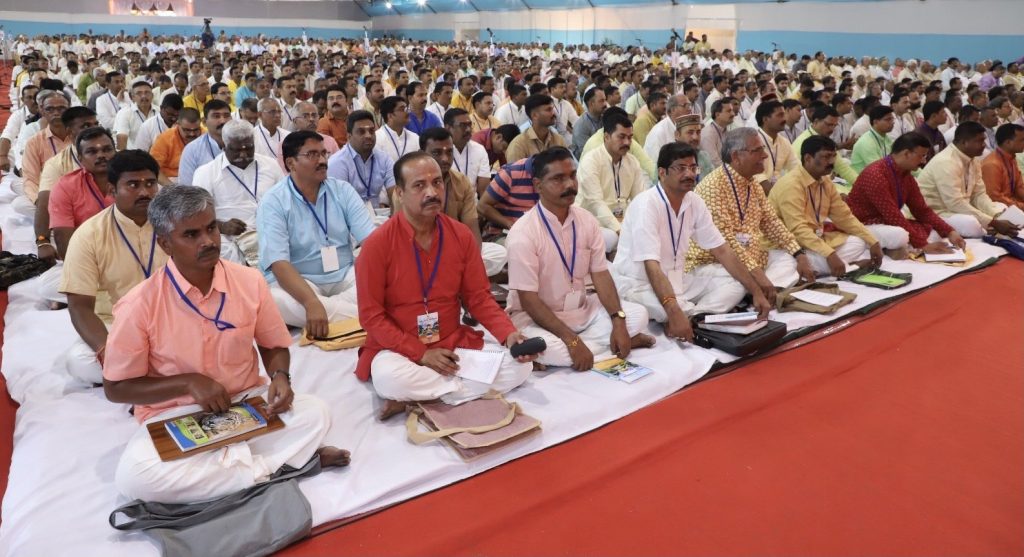
The Rashtriya Swayamsevak Sangh (RSS) will hold the annual meeting of its highest decision-making body, the Akhil BharatiyaPratinidhi Sabha (ABPS), in Samalkha (Haryana) from 13–15 March 2026.
Although the ABPS meets every year in March, the 2026 meeting carries added significance because it falls in the middle of the RSS’s centenary year. The organisation completed 100 years on Vijayadashami in 2025, marking the beginning of a year-long series of events and outreach programmes across India. The Samalkha meeting is expected to review these initiatives and set the organisational direction for the coming year.
A distinctive decision-making process
The deliberations at the ABPS offer insight into how the RSS manages leadership development, organisational review and grassroots expansion.
The organisation has two principal national decision-making bodies:
- Akhil BharatiyaPratinidhi Sabha (ABPS) – the highest representative council
- Akhil BharatiyaKaryakari Mandal (ABKM) – the national executive body
The ABKM typically meets once a year around September or October, while the ABPS convenes in March. Both bodies discuss organisational matters and adopt resolutions. However, the ABPS has an additional responsibility: it elects the RSS general secretary, known as the Sarkaryavah.
In practical terms, the Sarkaryavah oversees the day-to-day functioning of the organisation, supported by several Sah-Sarkaryavahs (joint general secretaries). The Sarsanghchalak serves as the guiding authority and mentor for the organisation.
Leadership succession in the RSS
According to the RSS constitution and long-standing organisational practice, the Sarkaryavah is elected, while the Sarsanghchalak is nominated by the outgoing Sarsanghchalak.
The nomination is generally made after informal consultations with senior functionaries of the organisation.
The first two Sarsanghchalaks of the RSS — Keshav Baliram Hedgewar and M. S. Golwalkar — were succeeded only after their passing. The third Sarsanghchalak, Balasaheb Deoras, introduced the practice of transferring leadership during his lifetime. The same tradition was followed by later Sarsanghchalaks including Rajendra Singh and K. S. Sudarshan.
Beyond political headlines
Public discussion around the ABPS often focuses on the presence of senior leaders from the Bharatiya Janata Party (BJP). However, the proceedings of the meeting are not centred on electoral politics.
The BJP participates in the meeting as one among roughly 32 organisations inspired by the RSS that are part of the broader Sangh ecosystem.
A key feature of the ABPS sessions is the set of presentations delivered by these organisations. Each organisation receives equal time to present its work over the past year, share innovative initiatives and highlight programmes that may be replicated in other regions. The BJP follows the same format as the other organisations and does not receive any special preference.
Organisational planning and long-term vision
A major task of the ABPS is to review organisational planning and chart the future course of the RSS.
The organisation typically works with a long-term perspective measured in decades rather than years. This requires regular evaluation of its activities and programmes across the country.
The ABPS provides a platform for such review because it brings together representatives from across the RSS network and its associated organisations. Around 1,500 delegates are expected to attend the 2026 meeting. The gathering will take place in the presence of the Sarsanghchalak, the Sarkaryavah, the Sah-Sarkaryavahs, and other senior functionaries.
Centenary year programmes under review
Since the Sangh is celebrating its centenary year, the meeting will include discussions on major programmes organised as part of the celebrations.
These include:
- Vijayadashami commemorative events
- GrihaSampark (a mass outreach programme)
- Hindu community conferences
- Youth gatherings
- Meetings with prominent members of society
- Social harmony initiatives
Delegates will assess how these programmes have progressed in different regions and discuss ways to strengthen their impact.
Review, resolutions and the year ahead
The ABPS will also review the RSS’s activities over the past year and examine important initiatives undertaken in various provinces. It typically adopts resolutions on issues relating to national life and social development, which help clarify the organisation’s perspective and guide its volunteers.
The 2026 meeting is expected to discuss initiatives such as Panch Parivartan (Five Transformations), as well as social outreach efforts conducted through local RSS shakhas, or daily volunteer gatherings.
There will also be deliberations on upcoming training programmes, including Sangh Shiksha Vargs (training camps) and Karyakarta Vikas Vargs (worker development courses).
The discussions at Samalkha will ultimately shape the organisational priorities for the coming year, offering a glimpse into how the RSS plans its work as it enters the next phase of its second century.